

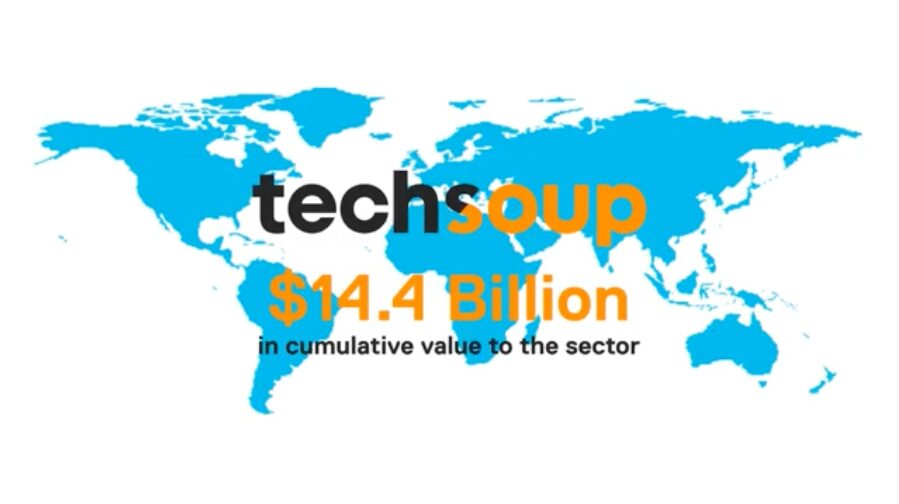
In this episode of the Charity Charge Show, host Stephen Garten speaks with Marnie Webb, CEO of TechSoup, about one of the most influential infrastructure organizations in the nonprofit world. TechSoup has supported more than 1.4 million nonprofits, charities, and libraries across 234 countries and territories. It has delivered nearly 22 billion dollars in technology and financial resources to help mission driven organizations operate with confidence in an increasingly digital world.
The conversation cuts through the noise. Most nonprofits do not have the budget, staff, or technical expertise to keep up with the rapid pace of technology. Yet they are expected to operate with the same level of digital strength that well funded companies enjoy. Marnie explains how TechSoup steps into this reality and why nonprofit technology support is far more than software discounts. It is about stability, trust, community strength, and clear pathways for organizations to adopt technology that actually fits their mission.
Overview
The Reality of Small Nonprofits
Stephen opens the discussion by highlighting a fact that far too few people understand. Roughly 95 percent of nonprofits operate under one million dollars in annual revenue. Around 75 percent operate under 250 thousand dollars. Most have one or two staff members or are volunteer led. They know their communities better than anyone, but they lack the resources to hire in house technology support or build systems that keep them secure and efficient.
Marnie confirms this reality. TechSoup’s work goes far beyond distributing donated software. The organization helps nonprofits figure out what technology they need, how to choose tools that reflect their values, how to present themselves online in a trustworthy way, and how to protect themselves from misinformation and security risks. It is practical support and strategic guidance rolled into one.
She tells a story from a colleague who volunteers with a small group that simply provides transportation so low income students can attend local art classes. The mission is small and precise, but the impact is real. It is the type of local, trust building work that defines the nonprofit sector. These are the organizations that need support the most.
How TechSoup Started and How It Grew
TechSoup’s roots go back to 1987, when journalist Daniel Ben-Horin noticed that nonprofits were being left out of the emerging digital world. He launched CompuMentor, connecting volunteers with nonprofits to give basic technical guidance. That turned into redistributing donated floppy disks. Later, Microsoft provided early support that helped the program scale.
Over decades, TechSoup built a global validation system to confirm nonprofit status in 234 countries and territories. Nonprofits paid small service fees that supported the educational resources they depended on. Over time, software moved from disks, to CDs, to downloads, and now to cloud based services that update constantly.
This shift created a new challenge. Technology changes in real time, not every time an organization renews a license. Tools like Zoom change because it is Thursday, not because a contract is up. TechSoup has adapted to this change by helping nonprofits adopt and optimize tools over time, not just acquire them.
Why Education and Community Matter More Than Ever
TechSoup’s online courses, peer communities, and training programs are not side projects. They are central. Marnie explains that nonprofits do not need generic tutorials. They need training that fits their organization’s actual workflow, values, and constraints. A food pantry uses spreadsheets differently than a corporate office. A youth shelter uses online safety tools differently than a marketing firm.
TechSoup views learning as part of the entire technology lifecycle: deciding what to adopt, teaching staff and volunteers how to use it, and staying current as the tools update.
Community is part of the solution. Most nonprofits cannot attend conferences or join trade groups. TechSoup’s role is to bring collective knowledge to them, no matter where they are located.
Building Bridges Rather Than Moats
Stephen and Marnie discuss a common challenge. Many nonprofits operate with a scarcity mindset. They worry about funding, they fear competition, and they hesitate to collaborate. Marnie offers a direct perspective. Large scale social challenges cannot be solved in isolation. Migration, climate change, food insecurity, and violence are interconnected problems. Nonprofits need shared standards, shared data, and shared tools so they can work together with the same sophistication as the challenges they are trying to solve.
She urges the sector to build bridges, not moats. Technology standards, shared systems, funder supported infrastructure, and coordinated advocacy lower the cost for everyone. She gives examples such as Giving Tuesday’s Data Commons and San Diego County’s shelter readiness tools, which help frontline workers find open beds faster and advocate for better shelter design.
The Virtual CTO Program and the Next Wave of Support
TechSoup and Tech Impact created the Virtual CTO program to support small nonprofits that cannot afford managed IT services. For 400 dollars a year, organizations receive strategic guidance, training, office hours, community support, and access to experts. It is not a replacement for a full technical team. It is a practical way to give smaller nonprofits the direction they desperately need without overwhelming their budgets.
Early survey data shows that many nonprofits need hardware first and digital communications support second. This insight will shape the next phase, which may include group purchasing, mini grants, and other tools that lower real costs for real needs.
What Nonprofits Teach the Rest of the World
The episode closes with a powerful truth. Nonprofits are often labeled as slow to adopt technology. Marnie challenges this idea. When crisis strikes, nonprofits respond with speed and clarity. They pivot. They fill gaps. They serve people who fall outside market systems. That flexibility and drive should be viewed as an asset, not a weakness. If anything, the for profit world has much to learn from nonprofits, not just the other way around.
TechSoup’s work reflects that belief. It supports the organizations that step forward when communities need them most, and it works to ensure they have the technology, training, and collective strength to continue doing so.
Final Thoughts
If you support or serve a nonprofit in any capacity, visit techsoup.org. The resources, courses, product access, and community support can save your organization time, stress, and money. More important, they can help you strengthen your mission with technology that works for you instead of against you.
TechSoup’s scale is impressive, but its value shows up in the smallest organizations that keep their communities moving forward every day.
Explore more at the TechSoup website and listen to the full episode of the Charity Charge Show to hear the complete conversation with Marnie Webb.
Podcast Transcript Interview
Q. What is TechSoup and who does it serve?
TechSoup is a nonprofit that supports other nonprofits, charities, and libraries around the world as they use technology to achieve their missions. It helps organizations not only access tools, but also understand how to choose, implement, and manage them in ways that match their values, limited budgets, and capacity. TechSoup currently supports more than 1.4 million organizations in 234 countries and territories and operates in 39 languages.
Q. Why are small nonprofits such a critical focus for TechSoup?
Most nonprofits are small. Roughly 95 percent operate under one million dollars in annual revenue, and many fall below 250 thousand dollars with five or fewer staff members or fully volunteer teams. These organizations know their communities well, often better than any large institution. They recognize local needs quickly and build deep trust with the people they serve. However, they usually cannot afford in house technology staff, consultants, or complex digital systems. TechSoup focuses on them because they are vital to community health yet structurally under resourced on the technology side.
Q. How did TechSoup get started?
TechSoup began in 1987 under the name CompuMentor. It was founded by journalist Daniel Ben-Horin, who saw that nonprofits needed help understanding and using technology. At first, the work focused on connecting volunteers with nonprofits to offer basic tech advice. When software companies started sending journalists review copies on floppy disks, Daniel realized those copies were being destroyed after use. Instead, he collected them and redistributed them to nonprofits. This effort grew into a partnership with Microsoft and other companies, and over time became a structured global program that validates nonprofits and helps distribute donated and discounted software.
Q. How has TechSoup’s work evolved as technology has changed?
Originally, the challenge was getting software into nonprofit hands and helping them install it on local machines. Over time, software shifted from floppy disks, to CDs, to downloads, and now to cloud based services that change constantly. Today, nonprofits often license a product once and then live inside an environment that updates on its own schedule. A tool like Zoom can change simply because the vendor releases a new feature that day. That means TechSoup’s role is less about installation and more about the full cycle:
- Helping nonprofits decide which tools fit their needs and values.
- Supporting adoption by training staff, volunteers, and boards.
- Helping organizations keep up as new features roll out, so they can actually use what they pay for or receive as a donation.
Q. What kinds of challenges do small nonprofits face with technology decisions today?
Smaller organizations often patch together advice from many places. They hear from vendors, volunteers, random online content, “AI robot friends,” and peers who may not share their context. They usually do not have a dedicated IT person and often cannot use restricted grants to pay for technology unless the funder explicitly allows it. They are trying to decide which tools to use, how to pay for them, and how to protect themselves and their communities from misinformation, data risk, and online fraud. This patchwork of information and constraints makes decision making hard and time consuming.
Q. Is TechSoup only about discounts and donated software?
No. Historically, TechSoup negotiated software donations and discounts for the nonprofit sector. That is still part of the work, but the landscape has changed. Many companies now run their own donation or discount programs. Nonprofits can get deals directly from vendors without going through TechSoup. At the same time, for profit intermediaries have entered the market.
So TechSoup’s unique value is shifting toward:
- Helping nonprofits understand what they are eligible for across many vendors.
- Giving neutral guidance on which tools make sense for their size, mission, and risks.
- Providing education, peer learning, and context that is specific to nonprofit work, not generic corporate usage.
Q. Why is education such a central part of TechSoup’s work?
Education sits inside the entire technology journey. It is not just a library of standalone courses. TechSoup focuses on questions like:
- How does a small food pantry use spreadsheets for inventory in a way that fits its reality?
- How should a youth serving nonprofit think about AI and data safety with vulnerable populations?
- How does a small team roll out a new tool so that every staff member and volunteer can actually use it?
The goal is to help organizations:
- Decide what to adopt.
- Train and support their teams so tools do not sit unused.
- Learn how to use new features as platforms evolve.
The emphasis is always on the health and effectiveness of the organization, not on technology for its own sake.
Q. How does TechSoup view community and collective learning in the sector?
Marnie describes community as a “sector wide superpower.” Many nonprofits cannot join associations or attend conferences due to cost and time. When TechSoup brings people together through online communities, regional convenings, or programs like the Megaphone events, it lowers the cost of learning.
Collective spaces allow:
- Sharing real life use cases from similar organizations.
- Learning how others handle digital security, AI, and data.
- Reducing duplication of effort so each nonprofit does not figure things out in isolation.
The aim is to turn inspiring stories into practical lessons and share them in the right way, at the right time, for peers who can act on them.
Q. What does it mean to “build bridges instead of moats” in the nonprofit world?
In the corporate world, companies talk about “moats” that protect their market advantage. In the nonprofit world, Marnie argues that resilience comes from bridges, not moats. Bridges connect organizations, data, tools, and knowledge so that:
- Agencies can coordinate around complex problems such as climate, migration, and food insecurity.
- Standards for data and technology are shared.
- Tools built in one region or area can be adapted for others.
However, she also acknowledges the reality of competition. Grants are finite, some organizations will get funded and others will not. The point is not to pretend competition does not exist. The point is to ask where shared standards, infrastructure, and collective efforts can lower costs and strengthen everyone, especially around technology and information.
Q. Can you share a concrete example of shared infrastructure that supports multiple nonprofits?
One example is a project in San Diego County supported by the District Attorney’s office. TechSoup and partners are building tools to help frontline workers more quickly find shelter for people experiencing homelessness. The system can:
- Help workers locate open beds in real time.
- Identify where specific types of beds are missing, such as more bottom bunks or facilities with secure lockers near beds.
This kind of shared system does two things. It improves day to day service delivery, and it gives decision makers better data so they can fund the right type of shelter capacity. Instead of each nonprofit building its own tool, the county and infrastructure partners support a common platform that many agencies can use.
Q. What is the Virtual CTO program and why was it created?
The Virtual CTO program is a joint effort between TechSoup and Tech Impact. It is designed for organizations under roughly 2 million dollars in revenue that cannot afford managed IT services or a full time technology leader. For an annual fee around 400 dollars, participating nonprofits receive:
- Strategic guidance on their technology roadmap.
- Group sessions and office hours.
- Access to experts and peers.
The idea came from TechSoup and Tech Impact leaders sitting together and asking how to support the smaller organizations that always seem to be left out. It is not a full fractional CTO embedded in one organization, but it brings many of the same benefits through shared, structured support.
Q. What problems has the Virtual CTO program already revealed?
Early surveys tied to the program show that, if given 2 thousand dollars, many nonprofits would spend it first on hardware, such as laptops. Second, they would invest in website design and communications. This tells TechSoup two things:
- Training and planning are important, but they do not fix the need for new physical equipment.
- Nonprofits know they must present themselves clearly and credibly online but often lack the budget to do that.
These findings push TechSoup toward exploring group purchasing, mini grants, and other approaches that tackle real money needs, not just advice.
Q. How does TechSoup think about funding, power, and the “burden” on nonprofits?
Marnie points out that in many areas, such as food security, the market works well for a majority of people, but it fails a significant minority. When the market fails, society often expects nonprofits to fill the gap with limited support. This means nonprofits are asked to solve complex structural problems using fragmented, short term funding.
On top of that, shifts in government policy, foreign aid, and political environments can cause sudden shortfalls or chilling effects on giving. In that context, expecting private philanthropy alone to close every gap is unrealistic. TechSoup’s response is to push for better infrastructure, shared systems, and advocacy that reduce the burden on individual organizations.
Q. What can the for profit world learn from nonprofits?
There is a common assumption that nonprofits lag behind on technology and operations. Marnie challenges this. When crises hit, nonprofits often pivot faster than large companies. They take on new roles that fall outside their original scope because the need is right in front of them.
Examples include:
- A youth sports club that suddenly becomes a support hub for refugee children.
- An animal shelter that also supplies food to pet owners so families can keep their animals.
Nonprofits are highly agile, mission focused, and deeply connected to their communities. Businesses could learn from this responsiveness, local insight, and commitment to serving people who sit outside profitable market segments.
Q. What advice does this episode offer to small nonprofits just getting started with technology?
A few clear themes emerge:
- Do not try to figure out everything alone. Tap into organizations like TechSoup and Tech Impact that exist to help you.
- Think in terms of staff capacity, not only budget. A small team must be realistic about how much change it can absorb at once.
- Focus on tools that directly support your mission and your relationships with the communities you serve, not just what is popular in the market.
- Invest in learning and adoption. A cheaper tool that no one uses is more costly than a slightly higher priced tool that your whole team understands.
- Look for bridges. Partner with peers, join learning communities, and take advantage of shared platforms rather than trying to build your own stack from scratch.