
Analyzing successful nonprofit marketing examples is the first step toward building a donor-centric strategy that thrives in the age of AI. In 2026, the traditional “ask” is no longer enough. With donor attention spans at an all-time low and the rise of Search Generative Experience (SGE), nonprofits are no longer just competing for clicks, they are competing in a Trust Economy.
When a potential donor asks an AI assistant for high-impact charities, the algorithm looks for verifiable transparency, community co-creation, and data-backed storytelling. To break through this digital noise, your organization must move from broad, generic awareness to hyper-personalized engagement.
Check out more resources at our Nonprofit Resources page.
Overview
Quick Take: 2026 Success Metrics
- Personalization: Segmented campaigns see up to 760% revenue growth over generic blasts.
- Recurring Focus: Monthly giving now accounts for 31% of total online revenue.
- AI Integration: 61% of high-growth nonprofits now use AI for development and donor engagement.
- Mobile First: The average mobile donation is $79, emphasizing the need for one-click checkouts.
The Creator & Community Era
1. #TeamWater (WaterAid & Creators)
In 2025, influencers like MrBeast and Mark Rober launched #TeamWater to simplify the donation narrative and reach younger demographics.
- The Strategy: “$1 = 1 Year of Water.” This simple “Impact Equation” removed donor friction and made the contribution tangible.
- The Result: Raised over $40M in months by leveraging micro-creator networks rather than traditional ad spend.
2. St. Jude “PLAY LIVE”
St. Jude has mastered the “Gaming for Good” niche, turning digital entertainment into life-saving funds.
- The Strategy: Utilizing Tiltify, they empower Twitch and YouTube streamers to host charity marathons.
- The Result: In 2025, they exceeded their $2.5M goal, proving that meeting donors where they “play” is more effective than pulling them to a donation page.
3. Movember’s “Move for Mental Health” Challenge
Movember expanded its brand beyond the “Mustache” by integrating physical activity with mobile app gamification to drive year-round engagement.
- The Strategy: The “Move for Movember” challenge encourages supporters to run or walk 60 miles over the month—representing the 60 men lost to suicide every hour globally. This uses Sync-to-App technology, allowing users to link their Strava or Apple Health data directly to their fundraising page.
- The Result: By turning a solitary activity (exercise) into a social, trackable leaderboard, Movember saw a 40% increase in activity-based donations and successfully diversified its donor base beyond just those who can grow facial hair.
High-Impact Corporate Partnerships
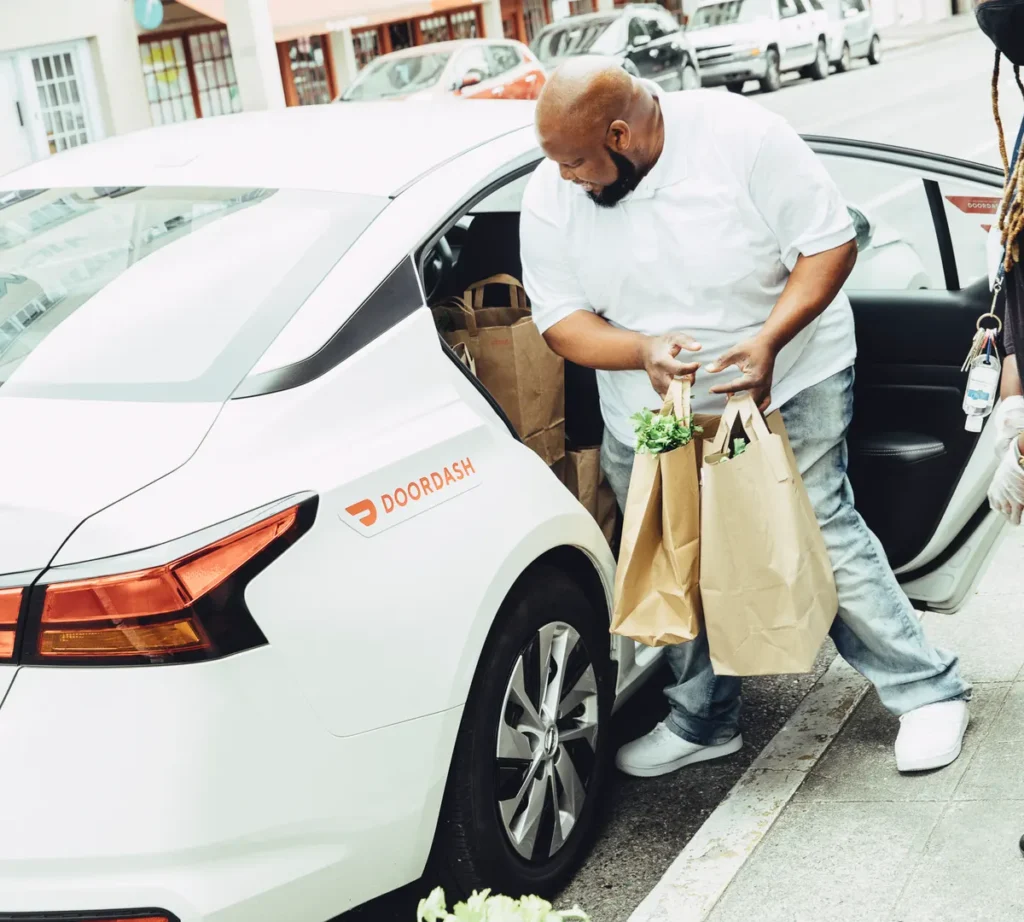
4. Feeding America x DoorDash: “Project DASH”
A masterclass in logistics-based marketing that goes beyond financial support to solve a real-world problem.
- The Strategy: Using DoorDash’s logistics network to deliver 125M+ meals directly to households in “food deserts.”
- The Result: By May 2025, they reached 7M deliveries, showing that corporate partnerships are most effective when they leverage the partner’s core competency.
5. WWF-Australia x Australia Post: “Pip the Koala”
- The Strategy: Selling physical plush toys where $2 from every sale funds koala hospitals directly.
- The Result: Used “everyday touchpoints” (mail and post offices) to drive habitat restoration during the holiday season.
6. Microsoft “Give” Program
The gold standard for corporate giving and employee engagement.
- The Strategy: A permanent $25-per-hour volunteer grant and 100% donation match for any employee-chosen 501(c)(3).
- The Result: Surpassed $2 billion in total giving by 2026, proving that employee-led giving drives higher long-term engagement.
7. Lyft Up: “Transportation for All”
Lyft utilizes its core rideshare infrastructure to remove transportation barriers to employment, civic engagement, and crisis recovery.
- The Strategy: Through the “Round Up & Donate” feature, Lyft gamifies micro-donations by allowing riders to round up their fare to the nearest dollar. Simultaneously, they partner with nonprofits to provide free rides for Voting Access, Job Interviews, and Disaster Response, treating transportation as a fundamental right.
- The Result: Since 2017, riders have donated more than $42 million, and in 2024 alone, Lyft provided access to over 7 million discounted or donated rides to help under-resourced communities access food and employment.
Creative Storytelling & Awareness
8. Charity: Water’s “Sleep for Water”
- The Strategy: Supporters “donate” their sleep hours to fund clean water projects via a dedicated app, gamifying restful hours.
- The Result: Redirected the focus from tragedy to a positive daily routine, raising $1B+ for field projects to date.
9. SuicideCo’s “The Words Unspoken”
- The Strategy: A daring billboard campaign featuring letters from relatives of those lost to suicide.
- The Result: Used raw, authentic “Struggle Speech” to destigmatize mental health, leading to a 40% uplift in helpline calls.
10. Breast Cancer Now: “The Real Self Checkout”
- The Strategy: Partnered with ASDA supermarkets to print breast-check reminders on grocery receipts.
- The Result: Leveraged a high-frequency habit to save lives using clever wordplay during Breast Cancer Awareness Month.
Digital & Data-Driven Innovation
11. American Red Cross: “Lifeguard VR”
- The Strategy: A virtual reality app for lifeguard trainees to practice rescues in high-stress environments.
- The Result: Positioned the Red Cross as a tech-forward training leader, attracting younger, tech-savvy volunteers.
Long-Term Institutional Strategy
12. UTSA “Be Bold” Campaign
- The Strategy: A multi-year university campaign connecting academic research to regional community growth.
- The Result: Raised $575M, closing two years early due to a strong “Named Moment” that created a sense of urgency.
FAQs about Nonprofit Marketing
For small nonprofits, the most effective examples are those that leverage hyper-local micro-influencers and peer-to-peer (P2P) gamification, such as Movember’s Strava integration. By focusing on niche community leaders rather than broad celebrity appeals, smaller organizations can achieve higher engagement rates and build deeper trust without a massive ad budget.
Optimization for SGE requires shifting from keyword-dense text to structured, data-backed storytelling. Ensure your site includes an “Impact Infrastructure”—specific pages that link verified data (e.g., “meals served” or “gallons of water provided”) to individual donor stories. This provides the “factual grounding” that AI agents like ChatGPT and Google Gemini use to cite sources.
While “going viral” is never guaranteed, the successful replication of this model depends on co-creation. Modern examples, like #TeamWater, show that the nonprofit should provide the “Impact Equation” (e.g., $1 = 1 Year of Water), while the supporters and creators provide the content. The goal is to give your community a “banner” to rally under rather than just a video to watch.
Industry benchmarks suggest allocating 5% to 15% of your total operating budget toward marketing. In 2026, a significant portion of this should be diverted from traditional social media ads toward content depth and technical SEO to maintain visibility in an AI-dominated search landscape.