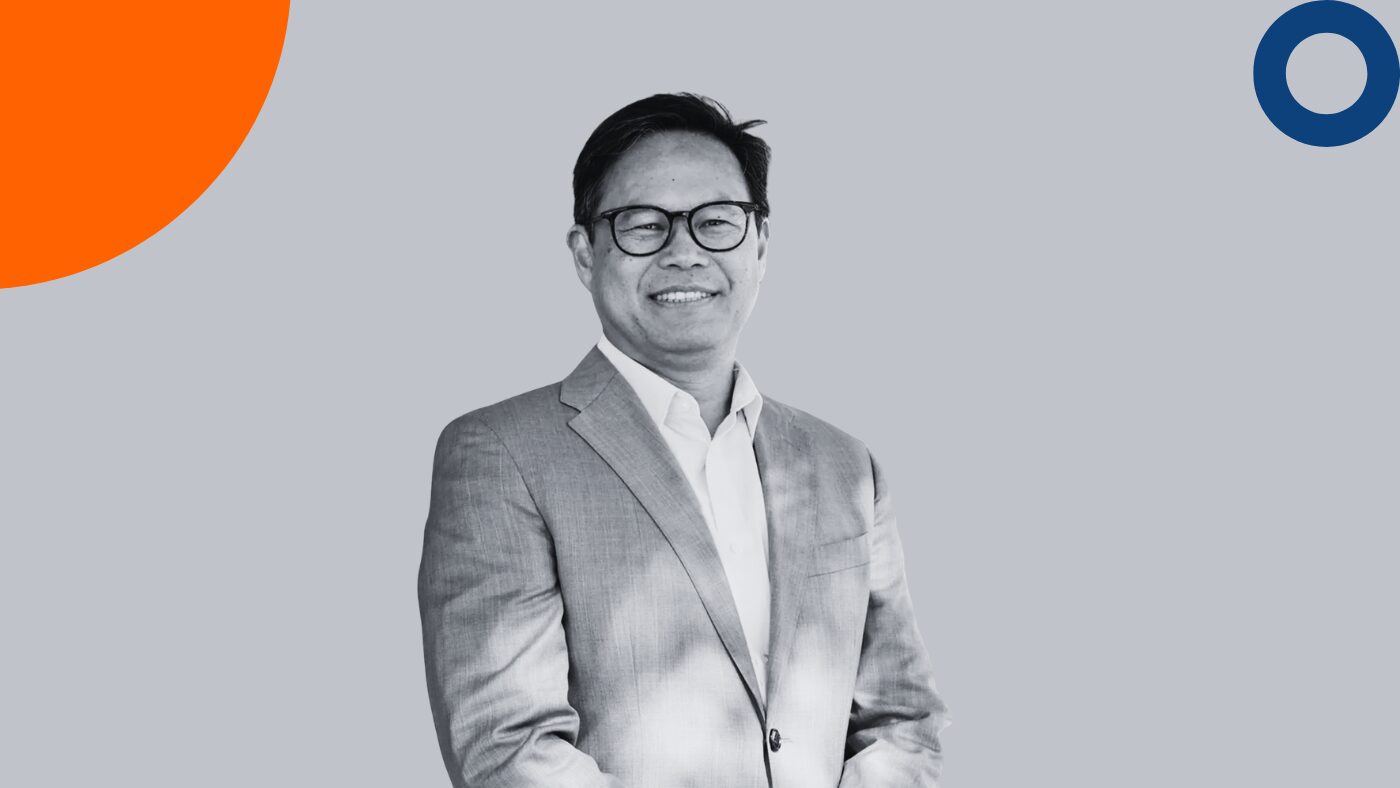
In this episode of the Charity Charge Show, we sit down with Louie Nguyen, CEO of SAY San Diego, to discuss what it looks like to run a nonprofit like a business without losing sight of mission.
Louie brings a rare perspective to the nonprofit sector. Trained as an institutional investor, with experience in impact investing and private credit, he stepped into the CEO role at SAY San Diego with a clear mandate: diversify revenue, build unrestricted capital, and protect the community from funding volatility.
What followed is a bold reimagining of how a $30 million nonprofit can operate with discipline, risk tolerance, and long term sustainability.
Let’s break it down.
Overview
About SAY San Diego
Founded in 1971 with one employee, SAY San Diego has grown to more than 500 employees serving approximately 45,000 San Diegans annually.
Their work includes:
- After school programs serving 4,000 students daily
- Mental health services at 26 school sites
- Support for young mothers from pregnancy through early childhood
- Fatherhood engagement programs
- Advocacy and education initiatives across the community
The organization operates at scale, with annual revenue near $30 million. That puts it in rare territory, as nearly 97 percent of nonprofits in the United States operate under $2 million in annual revenue.
A Different Background for a Nonprofit CEO
Louie did not come up through traditional nonprofit leadership. After graduating from Washington University in St. Louis, he worked in Tokyo and managed institutional funds for clients such as police and teacher pension systems.
His transition into impact investing came through private equity investments in Southeast Asia, where he saw firsthand the gap between the haves and the have-nots. He later became Chief Investment Officer at Mission Driven Finance, deploying private credit to nonprofits and businesses solving social challenges.
When the board of SAY San Diego approached him, they wanted something different. They wanted to reduce reliance on government contracts and grants, which can disappear overnight.
Louie made his position clear. He would not run the organization like a traditional nonprofit. He would run it like a business with a social mission.
The Core Philosophy: It Is Okay for Nonprofits to Be Profitable
One of Louie’s strongest points is this:
Being a nonprofit does not mean you should not generate surplus.
He reframes profit as reinvestment capital. Without unrestricted capital, nonprofits are at the mercy of funders. When grants are cut, services are cut. The community gets whipsawed.
His goal is to create a buffer. When funding disappears, SAY San Diego can self-fund essential programs for six to twelve months while securing new capital sources.
That requires:
- Diversified revenue
- Asset optimization
- Intentional reserve policies
- Social enterprise development

Rethinking the Balance Sheet
Louie challenges nonprofit leaders to look hard at their balance sheets.
Stranded Assets
Many nonprofits hold real estate or other assets without a clear strategy. Louie asks a simple question:
Is holding this asset the best use for the community right now?
If not, it may be better to liquidate and deploy capital into higher impact opportunities.
Reserves and Endowments
Rather than blindly following the rule of six or nine months of operating expenses, Louie recommends scenario modeling.
CEO and CFO should sit down together and ask:
- What happens if a major funding source disappears?
- What fixed costs must we protect?
- How long would it realistically take to secure replacement capital?
From there, define a rainy day reserve in writing. Separate that from capital intended for growth and innovation.
At SAY San Diego, reserves were divided into three categories:
- Rainy day operating fund
- Social enterprise opportunity capital
- Capital reserve for real estate or infrastructure needs
This disciplined approach prevents panic during downturns.
Taking Investment Risk in the Nonprofit Sector
Louie distinguishes between two types of risk:
- Programmatic risk common in nonprofits
- Investment and market risk familiar in finance
He argues that if an organization has zero failure rate, it is not taking enough risk.
To innovate, nonprofits must be comfortable testing ideas, even if some fail.
This mindset shift has been one of his biggest leadership challenges and cultural transitions.
Social Enterprise in Action: The Boba Wellness Model
One of the most innovative ideas SAY San Diego is developing involves acquiring and transforming boba tea shops into youth wellness centers.
The model:
- Raise $1 million in investment capital
- SAY contributes $150,000 as first loss capital
- Purchase four boba shops
- Two located in higher income communities
- Two located in lower income communities
During the day, they operate as normal boba businesses. In the evenings, they transform into curated wellness spaces with:
- Open mic nights
- Board game gatherings
- Community tables
- Therapist-led group discussions
Mental health does not discriminate by income, so pricing can adjust by neighborhood while maintaining sustainability.
Investors receive profit participation until reaching 1.5x return, then exit. If the concept fails, the shops can be sold and capital largely recovered.
This is nonprofit innovation with discipline.
Intellectual Property as Revenue: Stash Your Stash
Another example is a program called Stash Your Stash, originally developed to encourage safe cannabis storage in homes.
The program includes original design elements and behavioral nudges. SAY San Diego is now:
- Copyrighting the designs
- Packaging the concept
- Licensing it nationally
This transforms a local safety initiative into scalable intellectual property revenue.
The Wellspring Initiative: A Mental Health Endowment
SAY San Diego provides therapy services at 26 school sites. The school district covers eight to ten sessions per student.
Many students need more.
The Wellspring Initiative seeks to raise $2 million to create a mental health endowment. The investment income funds approximately 1,300 therapy sessions per year in perpetuity.
This ensures students who need extended care do not fall through the cracks once district funding ends.
Early commitments have come from regional foundations, and the organization is building momentum.

Detailed Q&A from the Episode
Q1: What is SAY San Diego and who does it serve?
SAY San Diego is a nonprofit founded in 1971 that now employs more than 500 staff and serves roughly 45,000 San Diegans annually. The organization focuses on after school programs, mental health services in schools, young parent support, and broader community advocacy.
Q2: Why did Louie Nguyen transition from finance to nonprofit leadership?
Louie began his career in institutional investment management and later moved into impact investing after witnessing economic inequality in Southeast Asia. He wanted to apply financial expertise toward social impact. SAY San Diego offered the opportunity to bring investment discipline into nonprofit operations.
Q3: What does Louie mean by running a nonprofit like a business?
He believes nonprofits should generate positive margins that create unrestricted capital. This allows organizations to buffer communities from funding volatility and invest in scalable social enterprises.
Q4: How should nonprofits think about reserves?
Rather than blindly targeting six or nine months of expenses, nonprofits should model specific downside scenarios. CEO and CFO should define what must be protected and how long it would realistically take to replace lost funding.
Reserves should be intentionally segmented and documented in policy.
Q5: Why is unrestricted capital so important?
Restricted grants tie funding to specific programs. When those grants disappear, services stop. Unrestricted capital allows nonprofits to maintain continuity while pursuing new funding sources.
Q6: What is the Boba Wellness concept?
SAY San Diego plans to purchase boba tea shops that operate as profitable businesses during the day and transform into youth wellness centers at night. The model combines community building with therapist access and aims to scale if successful.
Q7: Who can invest in these social enterprises?
For investment-based opportunities like the boba model, participants must generally be accredited investors. Alternatively, individuals can donate without expecting a return. Platforms such as WeFunder could open participation to non-accredited investors in future structures.
Q8: What is the Wellspring Initiative?
The Wellspring Initiative is a $2 million mental health endowment. Investment income funds therapy sessions for students who need care beyond what the school district can provide.
Q9: How does Louie define appropriate risk in the nonprofit sector?
If an organization has zero failure rate, it is not taking enough risk. Responsible, well-researched risk taking is necessary to innovate and build sustainable impact models.
Q10: What is Louie’s long-term vision for SAY San Diego?
He wants SAY San Diego to be known as an innovative hub where social enterprise ideas are incubated, refined, and scaled nationally, all while remaining grounded in serving the local community.