In this episode of The Charity Charge Show, we sit down with Rob Scheer, founder of Comfort Cases, a nonprofit that has delivered more than 300,000 backpacks filled with essentials to children entering foster care across all 50 states, Washington DC, Puerto Rico, the United Kingdom, and soon Canada.
This episode is about dignity, accountability, and building something that actually works.
Overview
Growing Up in the System
Rob did not come to foster care as an advocate. He came as a child who lived it.
He entered foster care because of abuse, not neglect. Cigarette burns on his body are reminders he still carries at 59 years old. Like many children in the system, he became a number, a file, a case. When he aged out at 18, he joined the tens of thousands of young people who are pushed out with no safety net. Within 24 hours, most become homeless. Rob was one of them.
He survived addiction, multiple suicide attempts, and repeated psychiatric hospitalizations. At 24, after nearly dying from an overdose, he made a decision that changed everything. He chose forgiveness. Not to excuse what happened, but to take his life back.
That decision did not make him a hero. It made him accountable.
The Numbers We Do Not Like to Talk About
During the episode, Rob challenges some of the most commonly repeated foster care statistics and explains why many of them understate the reality.
Here is what stands out:
- More than 400,000 children are in foster care in the United States.
- Roughly 23,000 youth age out every year.
- New homelessness counts show over 80 percent of people experiencing homelessness were touched by foster care at some point.
- Former foster youth are far more likely to experience PTSD than combat veterans.
- Only about 8 percent earn a four year college degree. That number improved recently, but it is still unacceptable.
Rob makes one point very clear. If a child enters foster care, society has already failed.
The Trash Bag That Started It All
Years later, after building a successful banking career, Rob and his husband Reese adopted siblings from foster care. When their first children arrived, their belongings came in black trash bags.
Then it happened again.
And again.
Trash bags are for garbage. Not for children.
When Rob asked a social worker why trash bags were still being used, the response was simple and devastating.
“What else should we use?”
His answer was just as simple.
“Dignity.”
That moment became the foundation of Comfort Cases.
What Is a Comfort Case?
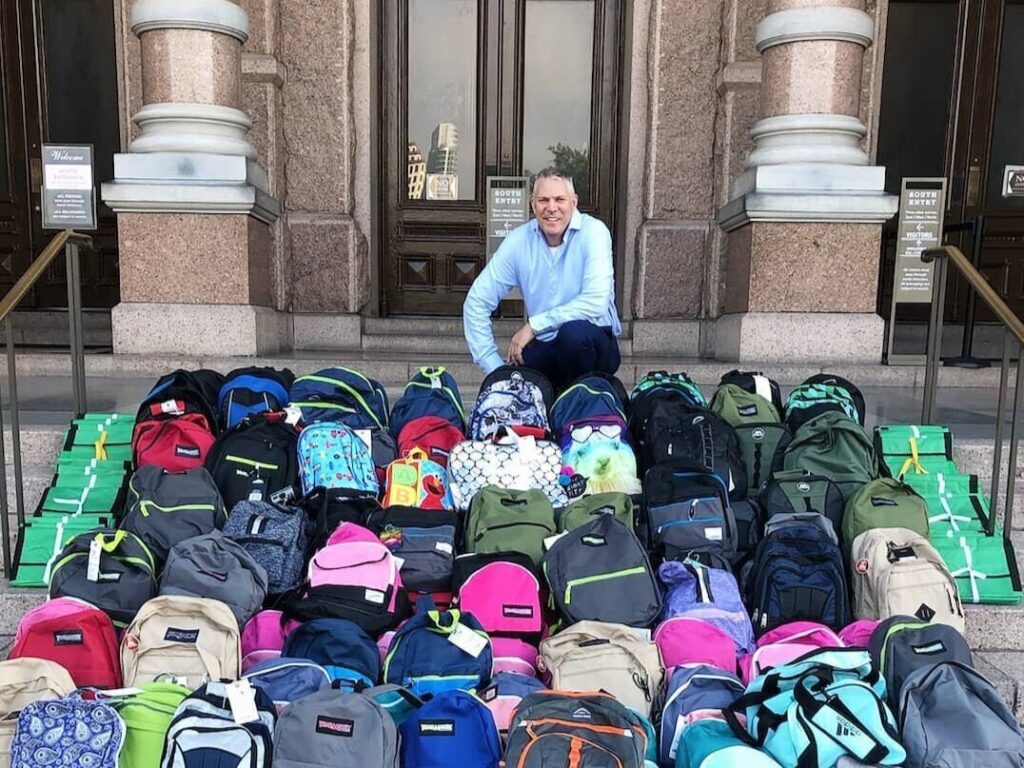
A Comfort Case is a high quality backpack filled with brand new essentials a child needs on their first night in foster care.
Each case includes:
- New pajamas with tags
- Shampoo, conditioner, lotion, and soap of their own
- A toothbrush and toothpaste
- A brand new activity or coloring book
- A journal for older children
- A stuffed animal
- A blanket
Nothing used. Nothing shared. Nothing disposable.
It is not charity for charity’s sake. It is a signal to a child that they matter.
From One Backpack to 300,000
The first Comfort Case was packed at Rob’s dining table with help from friends, family, and church members. His five year old son insisted every case include a blanket so children would feel loved.
Thirteen years later, Comfort Cases has:
- Delivered over 300,000 backpacks
- Reached all 50 states, DC, and Puerto Rico
- Expanded operations to the UK
- Announced plans to open in Canada
- Grown into a nearly $6 million nonprofit
All of this was built without federal or state funding and without reliance on a single major corporate sponsor. The average donor gives around eight dollars.
That is not an accident. It is focus.
Why Comfort Cases Scaled When Most Nonprofits Do Not
Nearly all nonprofits struggle to grow past one or two million dollars in annual revenue. Comfort Cases did not.
Rob credits three things:
- Normalizing foster care
Comfort Cases talks openly about foster care, not as a side issue, but as a shared responsibility. - Clear, tangible impact
Donors know exactly what their money does.- $25 buys pajamas for two children
- $50 provides toiletries for ten children
- $100 delivers dental kits to 33 children
- Collaboration over competition
Rob actively uses his platform to elevate other nonprofits. He believes the sector grows stronger when organizations work together instead of fighting over scraps.
That mindset is rare. It is also effective.
If He Had a Magic Wand
When asked what he would change about the foster care system, Rob does not hesitate.
First, financial security.
A portion of foster care payments should be placed into interest bearing accounts for each child, so aging out does not mean starting with nothing.
Second, real education access.
Not limited to in state tuition programs. Foster youth should have the same educational options as any other child, including private and out of state schools, plus mental health support to succeed once they get there.
This is not radical. It is responsible.
Podcast Q&A Transcript
Stephen Garten: Rob, can you start by sharing your personal connection to foster care and what led you to this work?
Rob Scheer:
I grew up in foster care. The only thing I truly wanted as a child was to be wanted. People don’t realize how lonely the system is. You can have social workers, judges, foster parents, and case files, and still feel completely alone. I entered foster care because of abuse, not neglect. I’m 59 years old and still carry the scars from the cigarettes my father put out on me.
I was the youngest of ten kids. When I entered the system, I became a number. A file. When I aged out at 18, nobody clapped. Nobody showed up. And like about 70 percent of kids who age out, I became homeless within 24 hours.
Stephen Garten: You talk a lot about how the system fails kids long before they age out. What do people misunderstand most about foster care?
Rob Scheer:
The biggest misunderstanding is that foster care is something “over there.” Once a child enters foster care, society has already failed. Period.
We also misuse the word neglect. Courts can remove children because parents cannot afford electricity or childcare. That’s not neglect. That’s poverty. We’ve created systems that punish people for being poor instead of supporting them.
And then we act surprised when outcomes are bad.
Stephen Garten: Many people quote statistics about foster care. Which ones matter most right now?
Rob Scheer:
There are over 400,000 kids in foster care. About 23,000 age out every year. But here’s what people need to understand. Recent homelessness counts show that over 80 percent of people experiencing homelessness were touched by foster care.
Former foster youth are significantly more likely to experience PTSD than combat veterans. And while the number of foster youth earning four year degrees has increased to about 8 percent, that is still unacceptable.
We should be ashamed of that number.
Stephen Garten: Comfort Cases started with something very specific. Can you explain how the organization began?
Rob Scheer:
When my husband and I adopted our first children, they arrived with their belongings in trash bags. Then it happened again. And again.
I asked the social worker why trash bags were still being used. She said, “What else should we use?”
And I said, “What about dignity?”
Trash bags are for garbage, not children. That moment never left me.
Stephen Garten: What exactly is a Comfort Case?
Rob Scheer:
A Comfort Case is a backpack filled with brand new essentials for a child entering foster care on their first night.
That includes new pajamas with tags, toiletries they don’t have to share, a toothbrush and toothpaste, an activity, a journal for older kids, a stuffed animal, and a blanket.
Nothing used. Nothing handed down. These kids walk into a stranger’s home. The least we can do is give them something that is theirs.
Stephen Garten: The scale you’ve reached is remarkable. How did this grow from one backpack to hundreds of thousands?
Rob Scheer:
The first backpacks were packed at our dining room table. My five year old son insisted every case include a blanket so kids would feel loved.
Thirteen years later, we’ve delivered over 300,000 comfort cases across all 50 states, DC, and Puerto Rico. We’re now serving tens of thousands of children in the UK and expanding into Canada.
We did this without federal or state funding. We’re close to a $6 million organization built largely on small donations. The average donor gives about eight dollars.
Stephen Garten: That kind of growth is rare in the nonprofit world. What allowed Comfort Cases to scale?
Rob Scheer:
We normalized foster care. We talk about it openly. We made the impact tangible. Donors know exactly what their money does.
And we collaborate. I use my platform to elevate other nonprofits. There is enough money to go around if we stop competing and start working together.
Nonprofits grow taller when they stop picking low hanging fruit and start building strong roots.
Stephen Garten: If you had a magic wand, what would you change about the foster care system tomorrow?
Rob Scheer:
First, financial security. A portion of foster care payments should be placed into interest bearing accounts for each child so aging out doesn’t mean starting with nothing.
Second, real education access. Foster youth should have the same choices as any other child. Not just in state tuition. Trade school. Private universities. Whatever they earn.
And wraparound services matter. Mental health care is not optional. Therapy builds strength. It doesn’t weaken you.
Stephen Garten: Where is Comfort Cases headed next?
Rob Scheer:
We are expanding internationally because the problem does not stop at borders. Foster care exists everywhere.
But the mission stays the same. Dignity. Visibility. Letting kids know they are not disposable.
Stephen Garten: Any final message you want listeners to walk away with?
Rob Scheer:
Every morning, do three things.
Smile at someone you don’t know. That might be the only smile they get that day.
Hold the door for someone.
And if you see someone sitting alone, go sit with them.
Connection is how we change tomorrow.
FAQs
Comfort Cases is a nonprofit organization that provides children entering foster care with backpacks filled with brand new essentials. These “comfort cases” replace the trash bags often used to transport a child’s belongings and help ensure a child’s first night in care begins with dignity, not disposability.
Each Comfort Case includes brand new items only, never used or shared. Contents typically include pajamas with tags, toiletries, a toothbrush and toothpaste, an activity or coloring book, a stuffed animal, and a blanket. Older children also receive a journal. Every item is chosen to help a child feel safe, valued, and cared for.
Comfort Cases serves children of all ages entering foster care, from newborns to young adults. The organization operates in all 50 U.S. states, Washington DC, and Puerto Rico, with active programs in the United Kingdom and expansion underway in Canada.
Comfort Cases is primarily funded through individual donations, with an average donor gift of around eight dollars. The organization does not rely on federal or state funding and has grown to nearly $6 million in annual revenue without dependence on a single large corporate sponsor.
Supporters can donate, host packing events, volunteer, or help spread awareness. Even small donations make a direct impact. For example, $25 provides pajamas for two children, $50 supplies toiletries for ten children, and $100 delivers dental kits to 33 children. More information is available at comfortcases.org.