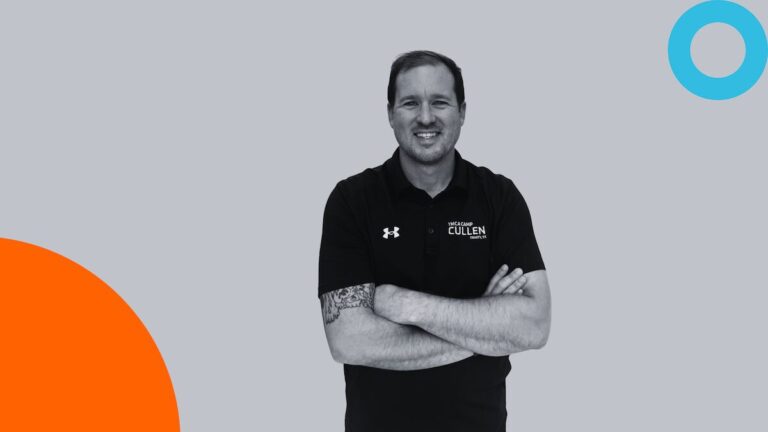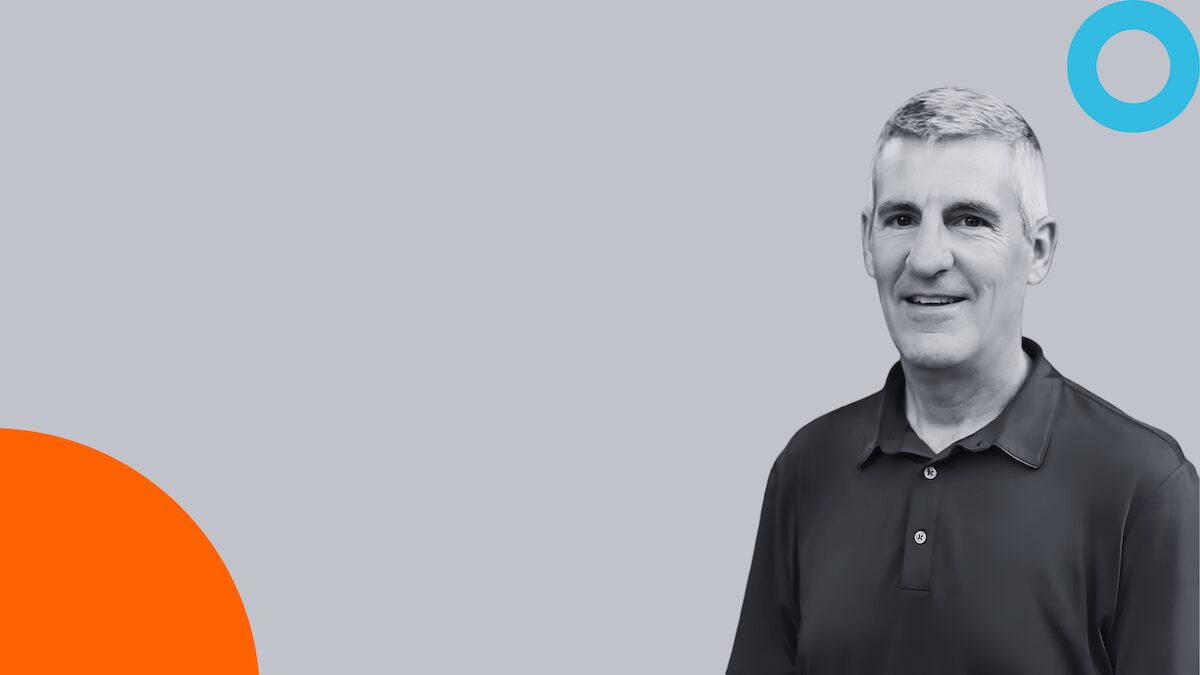
On this episode of the Charity Charge Show, host Stephen Garten sits down with Dave LeVan, CEO of Water for Good, to talk about how a faith-based water nonprofit doubled its reach without doubling its budget. The conversation covers mergers, decentralization, technology, fundraising, and a mindset shift that most nonprofit leaders never make.
Charity Charge provides financial tools for the 501(c)(3) organizations doing exactly this kind of work, which is why these operator-to-operator conversations sit at the center of the show.
Quick Summary
- Water for Good delivers water, sanitation, and hygiene (WASH) programs in some of the hardest-to-reach communities in sub-Saharan Africa and Cambodia.
- Its three-year “Healthy Village” model has kept 92% of water points flowing and cut childhood diarrhea by 90% over the past decade, per LeVan.
- The organization moved roughly 90% of its 280 staff in-country and gave frontline teams live data, which flattened the hierarchy and reduced burnout.
- Water for Good was formed by merging two healthy nonprofits, a rare move that let each contribute its strengths instead of hiring to fill gaps.
- LeVan’s north star: solve the problem and put the organization out of business, not protect it.
Who is Dave LeVan?
Dave LeVan is the CEO of Water for Good, a faith-based nonprofit that transforms lives through access to safe water, improved sanitation, and hygiene. The organization works in difficult places, including the Central African Republic, Ethiopia, Tanzania, Uganda, and Cambodia. LeVan spent most of his career in the for-profit world, including a transformation role at Walmart, before joining the organization first as a donor, then a board member, then chief executive.
How big is the global water access problem?
Roughly 697 million people worldwide lack basic access to safe water, meaning they cannot collect it and get home within 30 minutes, the World Health Organization’s threshold for basic access. LeVan’s figure aligns with the WHO/UNICEF Joint Monitoring Programme’s 2025 estimates, which show more than two billion people without safely managed drinking water and hundreds of millions still relying on unsafe or unimproved sources. Beyond the raw count, LeVan describes a second, hidden cost: women and children spend an estimated 100 million hours a day walking for water. The problem is twofold, he explains: the time it consumes and the fact that the source at the end of the walk is usually unsafe.
What is the “Healthy Village” model?
Water for Good’s Healthy Village program is a three-year model that combines water, sanitation, and hygiene rather than simply drilling a well. A local team of about 15 enters a program area of roughly 25,000 people, mobilizes several hundred community volunteers, and trains embedded local leaders to walk alongside about 30 households each for the first 18 months. Each household commits to seven or eight behavior changes, including building a pit latrine, a bathing shelter, and safe water handling.
Local engineers then design the most appropriate system for the terrain, from pipelines drawing on Lake Victoria in Tanzania to gravity-fed capped springs in the mountains of Ethiopia. The results LeVan cites are the reason the model matters. Over the past 10 years, about 92% of the organization’s water points have kept flowing, and childhood diarrhea in its communities has dropped by roughly 90%. Households living on two dollars a day or less are asked to invest 80 to 100 dollars of their own money into the work, a deliberate choice that builds ownership rather than dependency.
How did technology and decentralization transform the organization?
Water for Good moved engineering and day-to-day decisions out of the United States and into the countries it serves, then put live data in the hands of frontline staff. About five years ago it opened a headquarters in Addis Ababa, Ethiopia, and today roughly 90% of its 280 staff work in-country or at that hub. LeVan, who led a technology team during his time at Walmart, applied the same lesson to the nonprofit: software alone does nothing without the process built around it.
The payoff was capacity, not just efficiency. Field staff in remote areas can now see the results of their own work, connect with peers doing the same work in other countries, and answer many of their own questions without waiting on a chain of approvals. Quarterly pulse surveys capture how those teams feel about their engagement, and people in the most remote posts became visible enough to be promoted into leadership.
Why did the two organizations merge?
Water for Good exists today because two financially healthy nonprofits with different strengths chose to combine rather than compete. Mergers are rare in the nonprofit sector, LeVan notes, largely because leaders do not want to give anything up. In this case, one side handed over its established process and the other reworked its identity, all in service of serving more people more effectively. Donors reacted cautiously: some paused their giving for up to two years to see how the dust settled before deciding the mission was intact.
How do you fund growth and avoid nonprofit burnout?
LeVan’s fundraising confidence comes from a base built to scale, then tied to proof at every step. Water for Good served 1.3 million people in 2025 and aims to reach 2.6 million a year by the end of 2028 while increasing revenue only about 45%, keeping 80 to 82% of every dollar going to the field. He says the organization could triple its revenue without disrupting its people or systems, which is what lets him ask for growth with a straight face.
On burnout, which he calls rampant in the sector, his answer is structural. When he became CEO, the role signed off on nearly every engineering scheme, so he replaced approval with transparency and empowered country teams to decide within clear guidelines. Just as important, he says, is accepting that no decision will please every donor or staff member, and reconnecting people to the mission when it does not.
The abundance mindset: “put ourselves out of business”
LeVan’s goal is to make Water for Good unnecessary. If 697 million people gain access to water, sanitation, and hygiene, the organization has succeeded, and he is comfortable with competitors copying the model to get there faster. That framing echoes a story Garten shares from Charity Charge’s early days, when Bombas founder Dave Heath told him that other companies copying his donation-linked card would be a good thing, because everyone should be doing it. Both leaders land in the same place: hold the mission tightly, and hold everything else loosely.

Three takeaways for nonprofit leaders
- Treat mergers as a growth strategy, not a last resort. Combining two healthy organizations can unlock scale that neither could reach alone, if both sides are willing to give something up.
- Push decisions and data to the front line. Replacing approval hierarchies with transparency and live dashboards builds capacity and cuts the burnout that comes from bottlenecked leadership.
- Anchor every hard decision to the mission. Mergers, tech overhauls, and tough fundraising conversations all get easier when people can see why the change serves more people.
Detailed Q&A From the Episode
Stephen Garten: Tell us about Water for Good, the mission, and how you are working to change the world.
Dave LeVan: We are a faith-based nonprofit, and our goal is to transform lives through access to safe water, improved sanitation, and hygiene. We do that in really difficult places, in parts of sub-Saharan Africa, the Central African Republic, Ethiopia, Tanzania, Uganda, and Cambodia. If we are successful, every child will have safe water, a healthy community, and know God’s love for them.
Stephen Garten: What are the challenges around clean water that people in North America tend to take for granted?
Dave LeVan: Where we focus is people who lack basic access. Basic access, as the World Health Organization defines it, means someone can walk, get safe water, and be home within 30 minutes. There are about 697 million people who lack that, and mostly women and children spend around 100 million hours a day walking for water. So it is twofold: the time it takes, and the fact that the source is usually unsafe.
Stephen Garten: How are you solving the problem, and how long has the organization been around?
Dave LeVan: Combined, the organization has been around for almost 50 years, and next year we will celebrate 50. Over that time the methodology has changed, but we locked in on our vision of a Healthy Village program that combines water, sanitation, and hygiene. You can bring safe water in, but kids still get sick if there is open defecation and poor hygiene, so we work on all three.
Stephen Garten: What was the pit latrine you mentioned, and why does it matter?
Dave LeVan: A pit latrine replaces open defecation, which many of the places we work still practice. We have to change that behavior so people are not going out to the woods or by the river. It is a big deal, because people may live on two dollars a day or less, and we still ask each family to invest about 80 to 100 dollars in their own home, because we want them invested in the project.
Stephen Garten: How do you actually run projects across so many countries from a human capital standpoint?
Dave LeVan: We want to hire people in country for every role, because we want to empower each country to solve the problem. We have wonderful people in the US, but none of our US staff are the engineers or the behavior change folks. Each country team has its own engineers, behavior change specialists, accountants, and HR, and about five years ago we created our headquarters in Addis Ababa so corporate roles can reach any program area quickly.
Stephen Garten: How has the model changed over the years, and how has technology helped?
Dave LeVan: About five years ago we went through a big technology, empowerment, and structural change. Lifewater was doing great work but was very US-centric, with engineers managing issues from thousands of miles away, so the first thing we did was change the structure and open the Addis Ababa headquarters. Then we asked, what if someone in the most remote place could see the results of their work on their phone, see enough financial information to know where we are headed, and connect with someone doing the same work in another country. We spent about two and a half years implementing the software and building the process around it.
Stephen Garten: What difference did that change make?
Dave LeVan: Engagement went up, but the bigger result was capacity, because people can solve many of their own questions and give feedback to global leadership that we can act on faster than ever. We also wanted people to be known, so that promotions were not limited to the few of us at headquarters. We have been able to promote some people from our most remote places into leadership.
Stephen Garten: Why did the two organizations merge, and what did each side give up?
Dave LeVan: Mergers are rare in the nonprofit space, and I think that is because people do not want to give something up. We had two healthy organizations with different strengths, and instead of each of us hiring for what we were missing, we brought those strengths together. In a merger everybody gives something up for the belief in something better, and both sides had to let go of some identity or some process to serve more people.
Stephen Garten: You said you could triple your revenue. What did you mean?
Dave LeVan: It is not so much fundraising capacity. Because of the scale and systems we built, if we raised three times as much we could put it into meaningful field work without disrupting our people or technology, while still keeping 80 to 82% going to the field. When you operate at a smaller scale and wear all those hats, burnout is rampant, and that is not healthy.
Stephen Garten: How do you avoid CEO and staff burnout?
Dave LeVan: When I became CEO, the CEO approved almost everything, even every engineering scheme, so we changed that. There is a difference between the CEO approving everything and having transparency, so we empowered our engineers with guidelines and visibility. The other piece is accepting that you will not please every donor or staff member with every decision, and tying it back to the mission, which is why we are doing it.
Stephen Garten: What advice do you have for leaders deciding whether to partner or merge?
Dave LeVan: Go back to your mission. We get caught up in our name and our process and lose sight of the fact that it is not about us being successful, it is about successfully solving the problem. Stay true to your mission, your values, and who you are, but everything else, hold on loosely.
Stephen Garten: Is universal water access actually solvable?
Dave LeVan: I think it is. When Lifewater started in the late 1970s, close to two billion people lacked basic access out of a population just over five billion, and now we are at eight billion people with under 700 million lacking it. That is still way too many, but the number has come down, and with more energy, more collaboration, and community ownership, we can keep solving it, the same way the US eliminated most waterborne disease over the past century.
Stephen Garten: How can people support Water for Good?
Dave LeVan: The best thing is to go to our website, waterforgood.org. We break it down so you can see that five dollars helps one child have water for a month, and our program runs about 60 dollars a year for the first three years and about a dollar a year after that. We have the highest ratings from the charity rating groups, so treat it like an investment in impact, and reach out if you want to talk.
FAQs
Water for Good is a faith-based nonprofit that provides safe water, sanitation, and hygiene programs in hard-to-reach communities across sub-Saharan Africa and Cambodia. Its three-year Healthy Village model combines clean water infrastructure with behavior change to reduce waterborne disease.
WASH stands for water, sanitation, and hygiene, an integrated approach used by many international development nonprofits. The idea is that clean water alone does not improve health unless sanitation and hygiene improve alongside it, since poor sanitation continues to spread disease.
Roughly 697 million people lack basic access to safe water, according to figures cited by Water for Good and consistent with WHO/UNICEF Joint Monitoring Programme data. More than two billion people lack safely managed drinking water when broader measures are used.