

Most nonprofit leaders don’t start with a business playbook.
They start with a mission. A personal story. A deep conviction to solve a problem that matters.
Then reality hits. Fundraising, financial management, board dynamics, hiring, systems. Suddenly, they’re not just a mission-driven leader, they’re running a full-scale organization.
In this episode of the Charity Charge Show, Stephen Garten sits down with Lauren Reilly, Executive Director of Gratitude Network, to unpack how nonprofits can build the operational strength needed to scale their impact.
Gratitude Network is a nonprofit accelerator focused on organizations serving children and youth. Through executive coaching, strategic tools, and a global peer network, they help nonprofit leaders turn passion into sustainable growth.
The results are hard to ignore. Organizations in their program are scaling impact 5x and revenue 3x, with 95% still operating long-term.
Here’s the full breakdown.
Overview
Show Notes
Guest: Lauren Riley, Executive Director of Gratitude Network
Host: Stephen Garten
Organization Focus: Nonprofit accelerator for children and youth organizations
Key Topics Covered:
- Why most nonprofits fail in the first 2–3 years
- The gap between passion and operational skill
- How to approach fundraising with a value exchange mindset
- Why data matters more than ever in philanthropy
- Using AI to build SOPs and improve operations
- The importance of peer networks and emotional support
- How Gratitude Network scales impact across hundreds of nonprofits
Key Takeaways:
- Nonprofits are businesses. You need financial literacy, systems, and strategy.
- Fundraising is an exchange, not a request. Bring value to the table.
- Data + storytelling wins. Lead with metrics, close with emotion.
- Systems beat individuals. If everything lives in your head, you don’t have a scalable organization.
- Community matters. Peer support is a major unlock for nonprofit leaders.
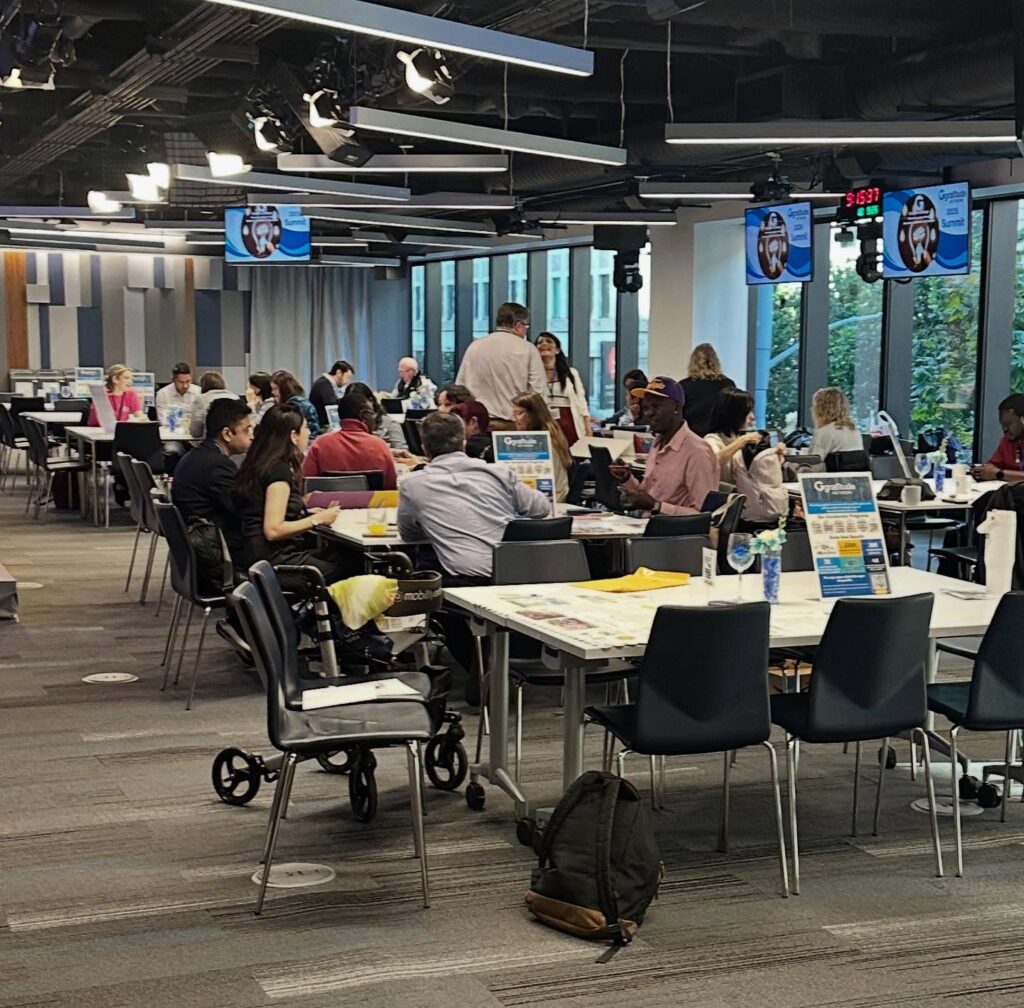
Q&A Interview
What is Gratitude Network?
Stephen: To start, what is Gratitude Network?
Lauren: Gratitude Network is a nonprofit accelerator. We support organizations focused on children and youth and help them grow and scale their impact. That includes executive coaching, tools, and strategies. Everything a startup nonprofit needs to succeed and scale.
Why is capacity building so important in the nonprofit sector?
Stephen: There are so many nonprofits, but not enough organizations helping them grow operationally. What role does Gratitude Network play?
Lauren: For-profit founders often go through business school or accelerators. They learn how to run a business.
Nonprofit leaders usually start with heart. That’s amazing, but a nonprofit is still a business. You have a P&L, a balance sheet, and operational complexity.
The challenge is many leaders don’t know what they don’t know. We step in to provide those tools so they can focus on impact instead of struggling with operations.
What kind of results have you seen?
Stephen: What tangible outcomes have come from your work?
Lauren: The stats are pretty stark. About 50% of nonprofits fail within 2–3 years, and only 30% make it to 10 years.
Through our program:
- Organizations are 5x-ing the number of kids they serve
- They’re 3x-ing their revenue
- 95% are still operating long-term
Sometimes all it takes is a bit of business acumen to unlock massive growth.
What are common fundraising mistakes nonprofit leaders make?
Stephen: Let’s talk fundraising. What do leaders get wrong?
Lauren: The biggest mistake is approaching it like, “Please, can I have some more?”
That creates a power imbalance.
We push nonprofits to define their unique value proposition. What are you giving in return?
That could be:
- Impact reporting
- Employee engagement opportunities
- Brand alignment
Also, data matters more than ever. It’s a crowded space.
You need both:
- Data to lead
- Stories to close
How should nonprofits think about data and systems?
Stephen: What are you seeing in terms of tools and data collection?
Lauren: AI is a huge unlock.
Nonprofits should be using tools like ChatGPT or Claude to:
- Build SOPs
- Define what data to collect
- Standardize processes
Everything needs to be documented. If the leader disappears tomorrow, someone else should be able to step in and run the system.
If it’s not written down, it’s not scalable.
What tools should nonprofits be using?
Stephen: Any tools you recommend?
Lauren: We stay pretty tech agnostic, but tools like Notion and Salesforce come up a lot.
The key isn’t just the tool, it’s timing.
For example:
- Salesforce offers free seats for nonprofits
- But it might be too complex early on
You need the right tool at the right stage.
How important is peer and emotional support for nonprofit leaders?
Stephen: Nonprofit leaders carry a lot. What role does community play?
Lauren: It’s huge.
The nonprofit sector has a 19% burnout rate, and hundreds of nonprofit CEOs step away every year.
Leaders are juggling:
- Staff
- Boards
- Donors
- Communities
Our global network allows leaders to connect with peers facing similar challenges.
That support isn’t just helpful. It’s essential.
How does Gratitude Network position itself to funders?
Stephen: How do you pitch Gratitude Network to funders?
Lauren: It’s about leverage.
When you fund Gratitude, you’re not impacting one nonprofit. You’re impacting hundreds.
We currently support:
- 300+ organizations
- 400+ leaders globally
Funders love that multiplier effect.
How can nonprofits get involved?
Stephen: How can people engage with Gratitude Network?
Lauren: Go to gratitude-network.org.
Options include:
- Applying for the 13-month fellowship (with ~65% scholarships)
- Participating in workshops
- Bringing us in for organizational training
We also offer free resources and sessions regularly.
Any recent updates or milestones?
Stephen: Anything new you want to share?
Lauren: We recently received a $100,000 grant from JustWorks to help expand our network and deepen long-term impact.
We’re excited about what that enables.