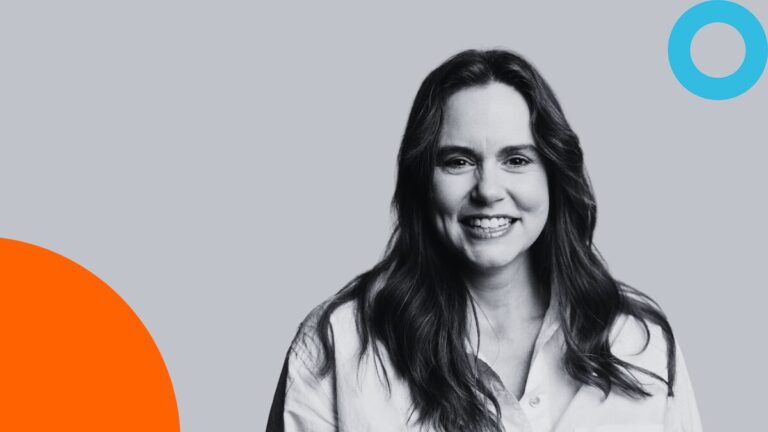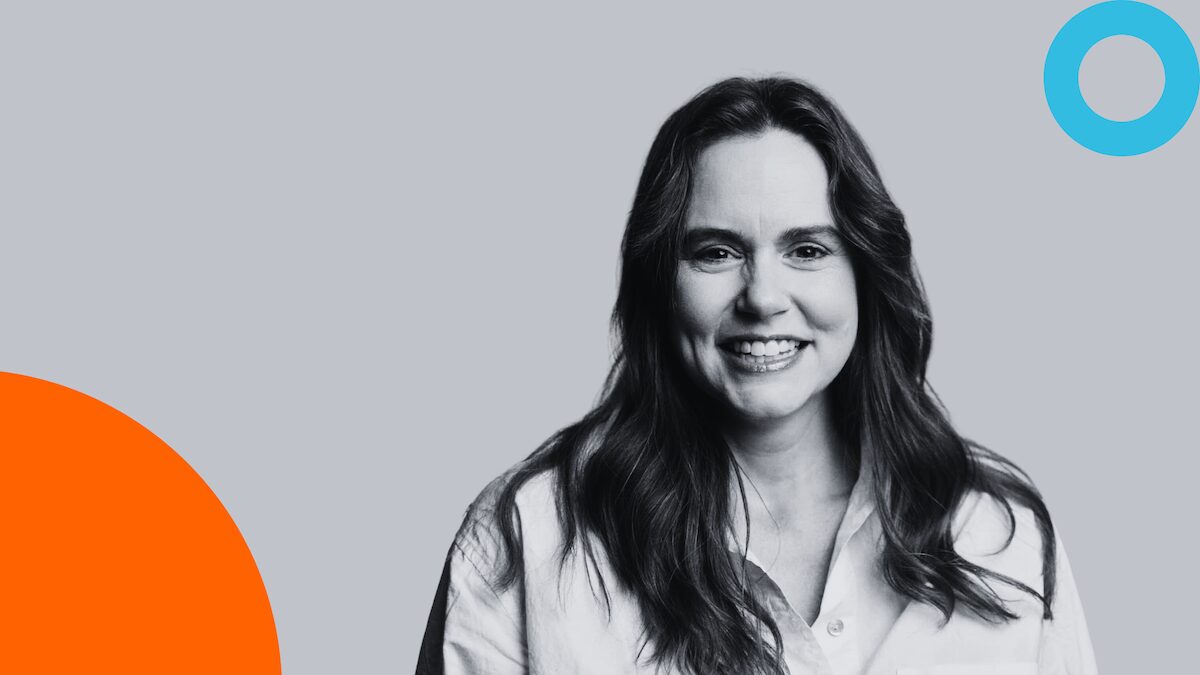
Nonprofits that depend on a single funding source are one policy decision away from a crisis. Christina Sass, President and CEO of the International Youth Foundation (IYF), learned this firsthand when USAID funding cuts hit her organization’s budget without warning. IYF is still standing 36 years after its founding, and Sass credits that survival to a funding structure the organization started diversifying before the cuts ever happened.
Subscribe to the Charity Charge Show.
Quick Summary
- IYF lost significant USAID funding in recent federal cuts but continued operating because it had already diversified toward corporate and private foundation partnerships.
- A modest endowment, built and protected by past leadership, gave the organization runway during the transition.
- Sass argues most nonprofits are under-capitalized the same way small businesses are: passionate about mission, behind on the operational and financial discipline that makes an organization durable.
- IYF’s approach treats employment itself as the core development tool, and increasingly builds AI-powered products, like a chatbot that surfaces local labor market data, to extend its reach without proportional headcount.
- Nonprofit finance leaders can apply the same lesson: room to maneuver comes from diversified revenue, not from a bigger mission statement.
Why a Single Funding Source Is a Structural Risk, Not Just a Budget Risk
A nonprofit that depends heavily on one government contract is carrying concentration risk, the same problem a business would have with one customer accounting for most of its revenue. When USAID funding was cut, Sass says IYF’s board and leadership had already been asking a harder question for years: where does the organization have real competitive advantage, and where is it just chasing the biggest available check. That earlier work, done before the crisis, is what created options once the crisis arrived.
IYF’s response wasn’t triage. It was closer to a portfolio audit. Sass says the team went back to basics: which labor markets, which partnerships, and which funder relationships were IYF genuinely built to serve? That meant stepping back from opportunities better suited to larger INGOs and leaning harder into the corporate and private foundation relationships where IYF could show a clear, defensible return.
An Endowment Is a Financial Tool, Not Just a Legacy Gift
Sass points to something nonprofit finance leaders underweight constantly: a “small but mighty” endowment that IYF’s past leadership built and protected. It didn’t replace the lost federal funding, but it bought the organization time to restructure without laying off the institutional knowledge that took decades to build.
This is a direct parallel to how a well-run business manages reserves. A cash cushion doesn’t exist to be spent in good years. It exists so that when a major revenue source disappears without notice, the organization has months to adjust instead of days. For nonprofit finance leaders reading this, the lesson isn’t “start an endowment tomorrow.” It’s that reserves and diversified income streams are risk management tools, not nice-to-haves for the fundraising department.
Corporate Partnerships Work Because They Solve a Business Problem, Not Just a Social One
IYF’s corporate partnerships, including a long-running relationship with FedEx in logistics and a 19-year partnership with Caterpillar, according to Sass, aren’t framed as charity asks. Sass describes IYF approaching industries with labor market data in hand: “you’ve got a hiring problem, and we can help you solve this.” Entry-level positions in logistics and manufacturing often carry high turnover and real training costs. IYF builds curriculum inside technical high schools that puts industry-specific skills directly into the pipeline, so graduates arrive able to do the job on day one.
This matters for how nonprofits pitch corporate funders generally. A partnership pitched as “help us with our mission” competes for discretionary giving budgets that shrink first in a downturn. A partnership pitched as “solve your hiring problem” competes for operating budgets that are far stickier, because the corporate partner has a direct business reason to keep paying.
Building AI Tools Internally Extends Reach Without Adding Headcount
One of the more concrete examples Sass shares: IYF built a chatbot that surfaces local labor market data for young people, essentially democratizing information that’s normally trapped in spreadsheets few people know how to interpret. She frames this as a deliberate resource allocation decision. IYF doesn’t have the capital to train every young person one-on-one, but it has strong underlying data, so it built a tool that scales that data instead.
For nonprofit operators, this is a useful reframe of AI adoption. It’s not about replacing staff. It’s about identifying where an organization has a genuine data or knowledge advantage that a tool can distribute at near-zero marginal cost, freeing staff time for the work that actually requires a human.
Treat Your Organization Like a Constrained System, Not a Cause
Sass repeatedly returns to a specific mental model: nonprofits, schools, and businesses each operate inside their own constraints, and none of them are individually accountable for outcomes like youth employment. IYF’s role, as she describes it, is understanding each party’s “room to maneuver” and building the connective tissue between them. That’s a systems-design skill, not a fundraising skill, and Sass argues it’s what lets a 36-year-old organization keep finding relevance instead of ossifying around a single program model.
The parallel for any nonprofit finance leader: your organization’s durability depends less on the size of your mission and more on how clearly you understand your actual constraints, your actual differentiators, and where you have leverage that funders, partners, and peer organizations don’t.
Three Takeaways
- Diversify before the crisis, not during it. IYF’s ability to absorb USAID cuts came from partnership and funding work done years earlier, not a scramble after the fact.
- Reserves buy time to restructure, not a permanent fix. An endowment doesn’t replace lost revenue; it prevents a funding shock from becoming an immediate staffing crisis.
- Pitch corporate partners on their problem, not your mission. Funding tied to a partner’s operating need is more durable than funding tied to discretionary giving.
Q&A: Christina Sass on Financial Resilience and the Future of Nonprofit Work
Stephen Garten: Can you tell us about the history of the International Youth Foundation and some of its accomplishments over 36 years?
Christina Sass: IYF was started by a large grant from the Kellogg Foundation to carve out a different space, recognizing that young people in major life transitions have different needs than K through 12 education addresses. It was an explicit effort to focus specific resources on the school-to-work transition and on employability, defined in partnership with industry. That legacy still exists today. We exist to unlock the potential of young people and give that talent to businesses that need it.
Stephen Garten: What’s made this organization continue to thrive from the employer side, the corporate side, of what they’re looking for?
Christina Sass: We look for labor markets with entry-level jobs at a dignified salary rate, with thousands of open roles, where that’s a real pain point for the industry. Sometimes the industry calls us. Sometimes we approach them with labor market data and say, you’ve got a hiring problem, and we can help solve it. We worked with FedEx and other logistics leaders directly with hiring managers to understand what skills they need, then built that into technical high school programs so graduates arrive skilled on day one.
Stephen Garten: You mentioned the USAID cuts. Talk about what your organization had done right to be able to weather changes like that.
Christina Sass: When I joined, the board and I were already asking where we make the most sense and where we’re clearly the most competitive, and looking hard at whether we should be chasing funding from the biggest players the way large INGOs do. That’s not us. Our strength is being nimble and innovative. I inherited strong partnerships on the private side, with private and corporate foundations, and also with USAID. When the cuts hit, we had a small but mighty endowment that helped us through a turbulent period, thanks to leadership before me that maintained it. We still have to prove our right to exist in a world with lots of service providers.
Stephen Garten: Can you talk about how AI is factoring into your work with young people?
Christina Sass: It’s not an easy time to be a young person, between climate change and the onslaught of AI. The fear that entry-level jobs would be eviscerated hasn’t happened, in part because there aren’t millions of AI-trained developers ready to be employed; we’re all learning at the same time. We’re flying at multiple altitudes: helping school administrators and teachers use AI as a tool, helping young people get comfortable with it as part of their employability, and building our own tools where we have strong data but not enough humans or capital. One example is a chatbot that democratizes labor market data, telling a young person what jobs are near them, what skills are needed, and where to get that training.
Stephen Garten: How do you measure success at IYF?
Christina Sass: There’s no formal credential from us; we’re the connective tissue in the background, bolstering systems that already exist rather than building something new. We count four things as wins: you got a job, you enrolled in further education, you started your own business, or you moved up in skill set or pay grade in a job you already had. The most important one is employability. I’ve seen a lot of youth training that results only in a certificate, and that frustrates me. It has to be marketable skills.
Stephen Garten: What percentage of the young people you’re helping are outside the US?
Christina Sass: Today, roughly 65 to 70 percent of the young people we work with are across Latin America, in Mexico, Peru, Colombia, El Salvador, and increasingly Brazil. In the US we’re working in New York State, North Carolina, and California, including a Department of Labor program on recidivism, reskilling, and job placement. We lost a lot of our Africa and Middle East work in the USAID cuts and are hoping to build that back.
Stephen Garten: What inspired your personal drive around this work?
Christina Sass: My father immigrated to the US at 22, and his first job was picking up trash in a park while he learned English. His second job was in an IBM warehouse, where he noticed expensive parts going missing and brought his bosses a plan to fix it. Someone gave him a shot, and he retired after 32 years at IBM. That wasn’t a merit-based system; it was someone giving him an opportunity to let his grit and intelligence shine. That’s what I try to do every day: give young people a shot in a formal system where they can build a career.
Stephen Garten: What habits or resources have helped you personally lead through this?
Christina Sass: I work with an executive coach, Jeff Hunter at Talentism, whose methodology centers on radical acceptance: figure out what you’re compulsive about, build your role around that, and give away everything else to people who are obsessive about those other things. In a resource-constrained organization, like a nonprofit or an early-stage startup, you have to build up a skill and then hand it off once you’ve found the right person for it. That discipline, seeing clearly what you’re not good at and designing around it, is a big part of how I try to lead.
FAQ’s from this episode
Nonprofits build resilience by diversifying revenue across corporate partners, private foundations, individual donors, and reserves before a crisis hits. Christina Sass of the International Youth Foundation says the organizations that survived USAID cuts had already built diversified partnerships and an endowment ahead of time.
Diversified funding means drawing revenue from multiple sources, like corporate partners, foundations, and individual donors, so no single funder can sink the budget. An endowment is a reserve fund that buys time to restructure after a shock; it supplements diversified funding rather than replacing it.
Pitch corporate partnerships around a business problem the partner actually has, such as high turnover or a hiring gap, rather than a discretionary giving ask. Sass describes approaching companies with labor market data showing a concrete hiring pain point, which ties the funding to an operating need instead of a charitable budget line.
Nonprofits can use AI to distribute a genuine data or knowledge advantage at low marginal cost, rather than replacing human judgment. IYF built a chatbot that surfaces local labor market data for young people, a problem with strong underlying data but not enough staff capacity to deliver it one-on-one.