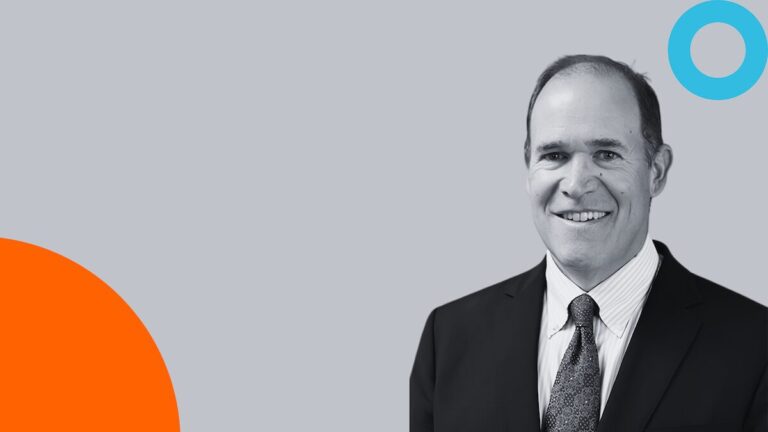
Christel House International measures success one way: whether a child born into extreme poverty ends up out of poverty for life. President and CEO David Harris has spent more than two decades building organizations around that single outcome, first as Indianapolis’ first charter schools director, then as founder of The Mind Trust, and now leading a school network operating across five countries. On a recent episode of the Charity Charge Show, Harris laid out the operating model behind that mission, and the leadership lessons that translate directly to any nonprofit trying to grow past its first few years.
Quick Summary
- Christel House International runs a no-fee, pre-K-through-12 model that stays with students for up to 18-19 years, through college and into their first job.
- CEO David Harris says the single biggest lesson for nonprofit founders is to treat funders as partners, not prospects to sell.
- The organization is expanding into new countries and says it will share its model with other school networks at no cost.
- Harris’s own path, from Indianapolis’ first charter schools director to founding The Mind Trust to leading Christel House, is itself a case study in staying committed to one mission for decades.
The Christel House Model: Why 18 Years, Not 4
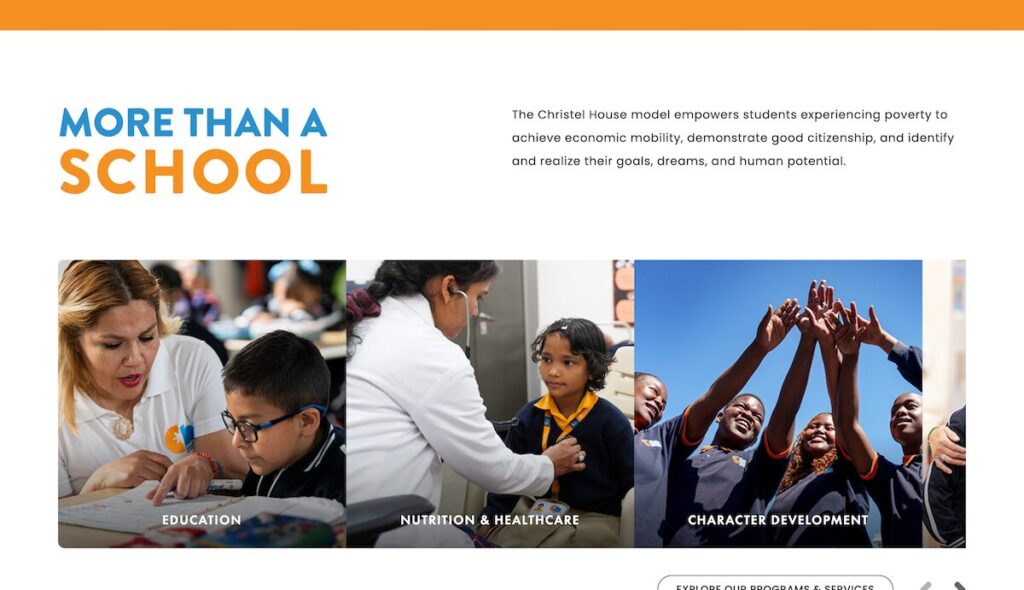
Christel House’s core bet is that a school alone cannot move a child out of poverty. The organization pairs its academic program with daily nutrition, health care, and social services support, and it stays with students for up to 18 or 19 years, from early childhood through high school and then five to six years beyond graduation into college, training, or a first job.
Founded in 1998 by philanthropist Christel DeHaan, the organization now operates outside the United States as no-fee private schools open only to children experiencing the most severe poverty, with no academic entrance requirements. In the U.S., its Indianapolis school operates as a public charter school, which changes how admissions work but not the underlying commitment. Harris says Christel House is the only school network in Indianapolis permitted under current law to preference low-income students in admissions.
Harris points to state-level data showing Christel House Indianapolis graduates post some of the highest earnings of any public high school in the city five years after graduation, and by far the highest among schools serving low-income students.
Why the Post-Graduation Years Matter Most
According to Harris, the period between high school graduation and a first job is where most support programs quietly disappear, and where students without financial or social capital are most likely to fall off track. A missing textbook, a broken-down car, or a dispute with a coach can end a scholarship for a student without a parent able to step in and fix it. Christel House assigns college and career coaches to fill that gap, connecting graduates with employers for summer jobs and internships and helping them navigate problems that wealthier families solve without thinking twice.
Harris is candid about the policy constraint this creates in the U.S.: public school funding generally cannot follow a student past graduation, which is why Christel House funds that support separately and why he sees it as one of the clearest gaps in how the country evaluates school success. Most accountability systems stop at standardized test scores. Christel House’s, he says, stops when a graduate is self-sufficient.
The Awareness Problem Every Mission-Driven Organization Faces
Christel House raises funds successfully in the U.S. and internationally, but Harris admits the organization is, in his words, too good a secret. Its answer has been to invest in storytelling that can substitute for a campus visit: a short documentary, released in partnership with filmmakers who Harris says became genuinely invested in telling the story after shooting it, is expected in the first half of 2027 and will be hosted at christelhouse.org.
The underlying insight applies well beyond one nonprofit. People who visit a Christel House campus in person consistently convert into long-term supporters, because they see the conditions students come from and the engagement in the classroom firsthand. Distributed content, like a documentary or a podcast, is the next-best substitute when a physical visit isn’t possible, which is the same bet Charity Charge makes with this show.
Fundraising Is Relationship Management, Not Sales
The clearest strategic lesson Harris offers nonprofit leaders is about how to work with donors. He argues nonprofits often make the mistake of treating funders as people they need to sell, when the far more effective posture is to treat them as partners: sharing wins and setbacks with equal candor. Harris recounts calling a donor to admit a program was struggling, and receiving a $100,000 gift the next day specifically to help solve the problem.
He also points to a newer funding structure Christel House secured in Colombia: a 50/50 capital and operating expense commitment “in perpetuity” from the Santa Domingo Foundation, which Harris says the organization had never had in any other country. He credits the arrangement to the depth of the partnership rather than a transactional pitch.
Christel House is also open to licensing or replicating its model for other school networks, though the organization currently offers that support at no cost rather than charging a fee for it, a decision founder Christel DeHaan made deliberately. Whether an earned-revenue model built around licensing the curriculum could fund further expansion is an open strategic question Harris did not close the door on during the conversation.
What 25 Years in Education Reform Taught Harris About Risk
Before Christel House, Harris founded The Mind Trust in 2006 after serving as Indianapolis’ first charter schools director under then-Mayor Bart Peterson, an initiative that won Harvard’s Innovations in American Government award. He led The Mind Trust until 2018. His advice to founders launching a nonprofit today: take real risks on the hardest, most uncomfortable ideas, because those are usually the ones that end up mattering most. He also warns against treating funders transactionally, a theme he returns to across both organizations he has built.
Three Takeaways
- Treat funders as partners, not prospects. Share setbacks as openly as wins. Harris’s own experience suggests it builds trust rather than eroding it.
- The support that matters most often comes after the primary program ends. For Christel House, that’s the five to six years after high school graduation. For any nonprofit, it’s worth asking what happens to the people you serve right after your program’s official finish line.
- Storytelling is a substitute for a site visit, not a replacement for proof. Christel House leads with data (graduation and post-secondary outcomes) and then uses documentary-style content to make that data emotionally legible to people who can’t visit in person.
Detailed Q&A
Stephen Garten: Could you tell the audience the background of Christel House International, why it was formed, and some of the accomplishments you’re most proud of?
David Harris: Our organization is focused on helping move kids born into extreme poverty out of poverty for life. We do that through a pre-K through twelve school model, and we also support our graduates as they navigate post-secondary education and help them secure a job. While they’re in school we provide rigorous academics along with daily nutrition, health care, and social services support, including support to their parents. Our founder sold her company in the early 1990s and was looking for a way to focus on philanthropy. A colleague invited her to invest in an orphanage in Mexico City. She went to see it, was impressed, but said she wanted to do more than support kids for a period of time, she wanted to move them out of poverty for life. Our first school launched in 1998 in Mexico City. We now have 11 schools worldwide and are opening four more next year. 95% of our graduates are either enrolled in post-secondary education or employed, and nearly 80% have significantly moved up the economic spectrum.
Stephen Garten: Christel House delivers strong on-time graduation and post-secondary enrollment rates compared to peer communities across your schools. What is the organization doing differently to drive those outcomes?
David Harris: Outside the United States we’re no-fee private schools, and in the U.S. we’re a charter school. We only serve kids experiencing the most significant poverty, with no academic requirements to enroll. I think the most important thing is that we’re with our students for 18 or 19 years, depending on the country. If you want to help kids born into those circumstances thrive, you can’t do it for just a few years, you have to commit for the long haul, to them and their families. We also do the things families with means do without thinking about it: daily nutritious food, adequate health care, social workers who work with families continuously, and support for parents. When I ask our alumni what allowed them to succeed, academics almost never comes up first. They talk about access to health care, or the support we provide after high school that keeps them on track when something as small as an expensive textbook or a ride to class could otherwise derail them.
Stephen Garten: With your schools in Indianapolis, can you talk about how the U.S. model differs, and what it reveals about gaps in American schooling?
David Harris: Our U.S. model is similar, but our Indianapolis school is a public charter school and receives public funding, so we have less control over admissions. We do focus on serving low-income kids, and we’re the only school network in Indianapolis that’s allowed to preference low-income students in admissions. Indiana recently released data on graduate earnings five years after high school by Indianapolis school, and our graduates have the second-highest earnings of any public high school in the city, and by far the highest among schools serving low-income students. I think the biggest difference is the support we provide for five or six years after graduation. We get students thinking early about what careers they want, which creates real motivation. But the period right after high school through a first job is where we’re losing too many kids, because public dollars generally can’t follow a student past graduation. We have to find ways to get resources to support kids during that window.
Stephen Garten: Can you share a tangible example of how you’ve provided support after graduation?
David Harris: We had a student in Indianapolis on a soccer scholarship who was in a dispute with his coach that threatened to end his time on the team, and with it his scholarship. Our college and career coaches stepped in the way a parent with social capital would, and he stayed in school. We had another student living in her car, which was her only way to get to school, and it broke down. We helped fix it and worked with her on her housing situation so she could keep going. And all along the way we’re connecting students with employers for summer jobs that can lead to something more. One of the things we’re most excited about is when alumni come back to work at our schools, including our new principal in Pune, who is an alum.
Stephen Garten: How have you worked to educate people and build support for Christel House’s international work, and how does that tie back to fundraising?
David Harris: Candidly, that’s been a challenge. We’re successful at fundraising, but we’re often told we’re too good a secret. We’re producing a short documentary on Christel House so people can get a better sense of what the experience is like, because when we get people onto our campuses, they get it immediately. They see where the kids come from and how engaged they are in the classroom. That’s very hard to recreate for someone who can’t visit in person, which is what this documentary is trying to solve. We expect it in the first or second quarter of next year.
Stephen Garten: What has your own transition into this role taught you, and what keeps you motivated?
David Harris: More than any organization I’ve been part of, our focus is on transitioning kids into successful lives, not just supporting them for a period and hoping things work out. When we take in a preschooler, we stick with that student until they have a job in the formal economy and can support themselves, their families, and their communities. Most school evaluation in the U.S. focuses on standardized test scores. Our North Star is moving kids out of poverty for life. We’re in the middle of an 18-month period launching six new schools: Pune in April, Mumbai in June, Colombia in January, Nepal in April, another Mumbai school the following June, and Mexico City in September.
Stephen Garten: As you think about scale, are there ways other schools or organizations could apply your model without you having to build and operate every school directly?
David Harris: Our founder, Christel DeHaan, believed strongly in sharing what we’ve learned. If anyone is interested in any aspect of our model, we’d encourage them to reach out, and we’re not looking to charge for that. Having been in education for 25-plus years, I’ve appreciated the help I’ve gotten along the way, so we want to extend that same help to others at no cost.
Stephen Garten: You have a background in law, and prior experience with The Mind Trust. Can you talk about that work and what led up to it?
David Harris: I started The Mind Trust in 2006 and left in 2018, and I’m happy to say it’s flourishing today. It focuses on incubating high-quality autonomous public schools, whether independent charter schools or what Indianapolis calls innovation network schools. It’s changed the landscape of the city, and Indianapolis now has a genuinely high-quality charter and innovation-network school sector. I came to that work from serving as the Indianapolis mayor’s charter schools director; the mayor at the time was one of the only mayors in the country with direct chartering authority. We saw an initial wave of people launch schools, and then that slowed, so we started The Mind Trust to accelerate the growth of high-quality autonomous public schools.
Stephen Garten: Roughly 92 to 93 percent of nonprofits stay under a million dollars in annual revenue. Looking back at building The Mind Trust, what did you get right that gave it staying power?
David Harris: You need a clear vision and a North Star that doesn’t move. The Mind Trust has had the same one since day one. But the biggest piece of advice I’d give anyone starting a nonprofit is to take risks. If you’re tackling systemic issues, the things that end up most impactful are usually the ones that felt hardest in the moment, the ones where you’re asking yourself why you’re doing this. They paid the biggest dividends because we were willing to challenge the status quo. I’d also say nonprofits often treat their funders as people they have to sell. I think of funders as partners: you tell them what you want to do, but you also tell them your challenges. When you’re struggling, the first call you make should be to your donors, not away from them. I once told a donor we were really struggling with a specific initiative, and the next day they sent a hundred thousand dollars to help solve it.
Stephen Garten: What daily practices or habits help you lead effectively?
David Harris: The most impactful thing I do is take the time to visit our schools, not just to meet with leadership, which I can do remotely, but to meet staff and engage directly with students and families. About a year ago we held a session with roughly 25 alumni in our Bangalore school to ask what, if anything, we could cut to operate more efficiently and serve more kids. The reaction was a collective sense of alarm at the idea of losing anything, nutrition, health care, social services, mental health support. It was a powerful reminder of why those pieces exist. We also stay in close, regular contact with school leadership around the world.
Stephen Garten: For people who are moved by this conversation, what are the ways they can get involved, whether through time, talent, or treasure?
David Harris: We love partners, because more partners means we can serve more students. In Colombia, we formed a partnership with the Santa Domingo Foundation that’s investing 50/50 in capital and operating expenses on our work in perpetuity, something we’ve never had in any other country. They believe in the model and want us to start several schools there. In India, government partners have provided land and newly built school buildings at no cost. We also deeply value individual donors. People can visit christelhouse.org to learn more, watch the documentary once it’s out, or connect if they’re an employer in one of our cities who could offer summer internships through our college and careers program, or if they want to volunteer at one of our schools.
FAQs from this episode
Christel House runs no-fee private schools outside the United States and a public charter school in Indianapolis, serving only children experiencing the most severe poverty. The model runs pre-K through 12th grade and pairs rigorous academics with daily nutrition, health care, and social services support for students and their families.
Christel House provides college and career coaching for five to six years after high school graduation, helping students navigate college, training, or direct entry into a job. Coaches also connect graduates with employers for summer internships and step in on practical issues, like transportation or housing, that could otherwise derail a student’s path.
Yes. Christel House says it will share aspects of its model with other school networks and organizations that want to apply it, and currently does so at no cost rather than charging a licensing fee, a decision reflecting founder Christel DeHaan’s belief in sharing openly across the education sector.
Harris advises new nonprofit founders to take real risks on the hardest problems, since the initiatives that feel most uncertain in the moment often end up delivering the biggest impact. He also emphasizes building funder relationships based on transparency rather than a sales approach.