Published September 9, 2026. Based on a recorded interview with Tony Surrette, CFO of the Springfield Museums, conducted by Grayson Harris of Charity Charge. Published with the museum’s written permission.
The Springfield Museums had been operating for 170 years before it issued its first organizational cards. Three months after moving to Charity Charge, its gift shop buyer had stopped running $10,000 to $15,000 a month through a personal credit card, twelve cardholders, the department heads and the president, were spending within limits set before their cards arrived, and the finance team was reading a monthly spend report instead of chasing receipts.
Quick summary
- Springfield Museums is a nationally accredited nonprofit museum with 170 years of operating history and a finance function of about 80 staff hours a week.
- Before the switch, staff bought supplies on personal cards and waited for reimbursement checks; the gift shop buyer alone was putting $10,000 to $15,000 a month on her own card.
- The museum issued 12 cards, one to each department head and the president, with limits configured before the cards shipped. Cards arrived within a week of kickoff.
- Every cardholder signed an internal card agreement on top of the platform’s limits, which the CFO describes as two independent checks on spending.
- Spend is visible as it happens, limits are adjusted from an admin login, and the monthly report by cardholder goes straight into the museum’s records without manual entry.
In This Case Study
The organization
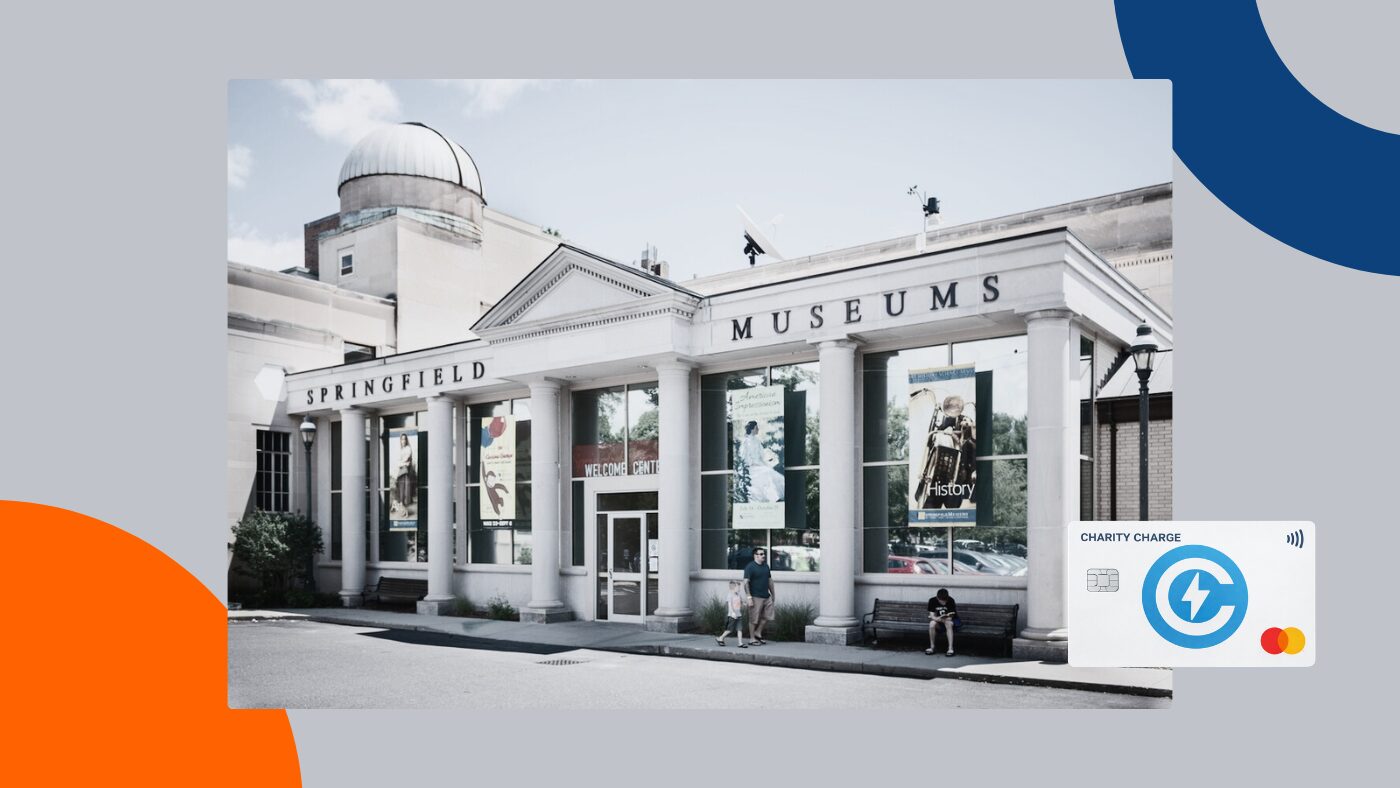
Springfield Museums is one of roughly 3 percent of museums in the United States to hold national accreditation. It has operated continuously for 170 years, runs an in-house gift shop with monthly purchasing between $10,000 and $15,000, and runs a travel program that takes visitors to other museums about once a month.
The finance and accounting function runs on roughly 80 hours of staff time a week. Before Charity Charge, a share of that time went to reconciliation by hand: chasing receipts, matching them to purchase orders, cutting reimbursement checks, and coding expenses in Great Plains, the museum’s legacy accounting software.
Tony Surrette, the museum’s CFO, spent 20 years in public accounting and came to the museum from a corporate environment where card-based expense management was standard. When he joined about two years ago, he started looking for what he calls low-hanging fruit, and the reimbursement process was near the top of the list.
The problem: personal cards, paper POs, and delayed visibility
Purchasing ran on personal cards and reimbursement checks. The gift shop buyer, first a contractor and later an employee, was putting $10,000 to $15,000 a month of store inventory on her own credit card. Smaller purchases across the museum worked the same way: paper, ink, pencils, tissues, lunch for a team that had just opened an exhibit.
Three problems stacked on top of each other.
No current view of spending. Expense data showed up weeks after the purchase, once someone submitted a receipt and finance processed it. If a manager wanted to know what the museum had spent on supplies that month, the answer was a manual exercise.
Employees floating the museum’s expenses. Reimbursement meant waiting for a check run. Between the purchase and the check, an employee could wait a month to be repaid, and the museum was writing recurring checks to its own staff, which also has to be documented carefully under the IRS accountable plan rules to stay out of taxable-wage territory. The full inventory of what goes wrong when staff buy on personal cards is on our personal card risks page.
Purchase orders for pizza. A routine purchase needed a PO for the estimated amount, an approval, the receipt, and a reconciliation step if the final total differed from the estimate by a dollar. For small, time-sensitive purchases the overhead was out of proportion to the spend.
“We’re still trying to catch up, riding a bike when we could be driving a car.”
Tony Surrette, CFO, Springfield Museums
Why the museum chose a nonprofit-specific card
Tony’s search started where most do, with the ordinary Visa and Mastercard business cards. Then the question changed. The museum is a nonprofit; a card built for nonprofits would presumably understand a nonprofit’s operations, fund accounting, and the compliance sensitivities that come with 501(c)(3) status.
“There’s got to be specific people for nonprofits. Nonprofits are a pretty big industry now.”
Tony Surrette
A search led him to Charity Charge. After the first two conversations with the team, in his words, “this is where we’re supposed to be.” The museum was approved for a limit that fit its spending, and the account was live about two months before this interview.
Implementation: cards in a week, limits set in advance
The museum issued 12 cards: one to each department head and one to the president. Card profiles and spending limits were decided with the implementation team and configured before the physical cards shipped. Cards arrived within a week of the kickoff meeting. Everyone started at the same limit except the president and the directors, with the option to adjust as usage patterns emerged.
The museum then layered its own control on top. Every cardholder signed an internal card agreement covering what the card is for and what it is not for, and Tony met with each of the 12 individually to confirm they had the card, had signed for it, and understood their limit. Between the limits set in the platform and the signed agreement, the museum has two independent checks on every purchase. (If you need the agreement, our nonprofit credit card policy template includes a cardholder acknowledgment form.)
One early incident tested the setup. A staff member needed to buy software that cost slightly more than their card limit. Tony logged in as the administrator, raised that one cardholder’s limit for the day, the purchase went through, and he set the limit back. No approval chain, and no standing exception left behind.
What changed in three months
Personal-card reimbursements for routine purchases stopped. Staff in any department buy directly on their card without fronting money or waiting for a check. The gift shop buyer now purchases inventory on the Charity Charge card through the Faire wholesale marketplace, with the order, amount, and delivery date captured at the point of purchase rather than reconstructed from a receipt weeks later.
Visibility moved from weeks-late to as-it-happens. Transactions are visible when they post, so the finance team can act on an anomaly the same day instead of discovering it in the next close. The monthly spend report by cardholder comes from the platform and goes straight into the museum’s records; nobody retypes it.
The travel program got a card. The manager who takes visitors to other museums now carries one. An unplanned stop or an incidental cost on a trip is handled on the spot, without a checkbook and without anyone being stranded.
Receipt capture is partway there. Four or five of the twelve cardholders photograph receipts in the app at the point of purchase. Tony expects the rest to follow as the habit settles in; the step itself is a snap of the phone.
Asked to quantify the impact, Tony declined to invent a number.
“How do you measure it’s easier and better? That’s a tough thing to say.”
Tony Surrette
He plans to start tracking hours saved as the process settles. What he can already point to is that the finance team is not stamping receipts and matching them to purchase orders, and that a department head who bought a case of water for their team no longer has to worry about a lost receipt.
What’s next
The museum is a few months in. Virtual cards are on Tony’s list but not yet in use. The larger near-term opportunity is on the accounting side: card charges still reach Great Plains partly by hand, and the museum is weighing a move to a modern platform such as QuickBooks Online, Sage Intacct, or NetSuite. Once that happens, card transactions can flow into the ledger with their coding attached instead of being keyed in, which removes the last manual step and the typos that come with it.
His advice for another nonprofit weighing the same move: have the conversation with the team, and let them show you the difference. A long operating history is not a prerequisite. In his view the same tool fits an organization five years in.
“We haven’t even kind of touched the surface yet.”
Tony Surrette
About the card
The Charity Charge Business Credit Card is a true line of credit underwritten to the organization’s EIN, with individual cards, per-card limits, virtual cards, one-time-use cards, and real-time controls. The balance is paid on time and in full each statement cycle. Receipt capture, approval workflows, and real-time transaction visibility are included, and spending is organized by fund, grant, program, department, or event, with QuickBooks sync or export to your ledger. There is no annual fee. For how a setup like the museum’s works as a full purchasing card program, from request through offboarding, see our guide to P-cards for nonprofits.
If your organization has several cardholders and program-level spend like the museum’s, see if your organization qualifies for the Corporate Card. Smaller organizations with a few cardholders can start with the Nonprofit Business Card.
FAQs
Twelve: one to each department head and one to the president. Card profiles and limits were configured before the cards shipped, and every cardholder signed the museum’s internal card agreement before using the card.
The museum received its cards within a week of the implementation kickoff meeting, with limits already set. Tony Surrette then met with each of the 12 cardholders individually before the cards went into use. Timelines vary by organization and are set during onboarding.
At Springfield Museums the CFO, as account administrator, raised one cardholder’s limit for a single day to cover a software purchase, then set it back. Charity Charge limits are set by merchant, category, or dollar amount; at the museum the CFO changes them himself from the admin login.
A monthly spend report by cardholder, generated by the platform and filed directly into the museum’s records without retyping. Transactions are visible as they post, so anomalies can be handled the same day.
Not yet. Virtual cards are on the CFO’s list. The museum runs Great Plains, so card charges still reach the ledger partly by hand; a move to a modern accounting platform would let transactions sync with their coding attached. Charity Charge syncs with QuickBooks or exports to your ledger.