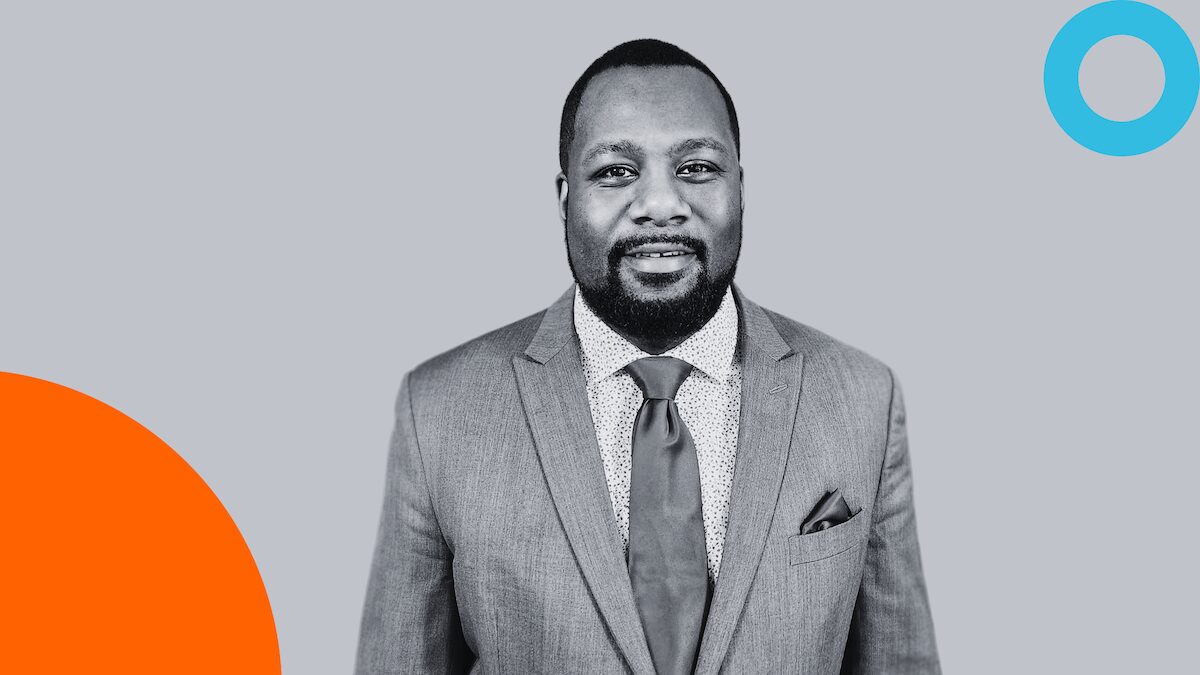
Nonprofit revenue diversification is the practice of funding programs from several independent sources, so a single cut grant or shifted corporate budget does not break operations. Urban Alliance Detroit, a youth workforce nonprofit, does it by turning existing assets into unrestricted revenue and by structuring employer partnerships so companies fund the interns they host. Charity Charge works with nonprofit finance leaders on spend control and reporting every day, and this conversation on the Charity Charge Show is one of the clearest operator-level answers we have heard to the question every executive director is asking this year: what do you do when funding changes?
Quick Summary
- Urban Alliance was founded in 1996 at Anacostia High School in Washington, DC, and now operates in Greater DC, Baltimore, Chicago, and Detroit.
- Its Detroit office runs a paid, earn-and-learn model that now serves young people ages 16 to 24, from 11th grade through young adulthood.
- Employer partners often cover intern wages or program costs, which makes them funders and hosts at once.
- Executive Director Alphonso Amos built new unrestricted revenue by renting underused training space and is exploring licensing the organization’s curriculum.
- His leadership rule: hire for value alignment over skill set, then let the team be the subject matter experts.
What is Urban Alliance Detroit?
Urban Alliance is a national nonprofit that connects young people to paid internships, mentoring, and professional skills training. It began in 1996 when co-founder Andrew Plepler, then a Department of Justice attorney, found paid summer work for six students at Anacostia High School in Washington, DC.
Plepler later served as Bank of America’s Global Head of ESG until his retirement in 2024, and he passed away in 2025. Alphonso Amos described the founding idea simply: young people with the ability to succeed often lack the connections or experience to get started, and an employer willing to open a door can change that.
The organization expanded to Detroit in 2018. Amos was named Executive Director of the Detroit region in 2023.
How does the Urban Alliance internship program work?
Urban Alliance runs a structured pipeline that trains young people before placing them in paid work, then keeps supporting them after. In Detroit, it starts as early as 11th grade and extends to adults up to age 24.
The stages, as Amos described them:
- Junior year: an out-of-school-time program, two to three days a week, covering essential skills, career exposure, networking, and resume building, followed by a short summer internship.
- Senior year (the flagship High School Internship Program): seniors start on the first day of school and attend daily for a full semester. They complete career assessments, build resumes and elevator pitches, and learn time management, financial literacy, and digital literacy.
- Paid placement: in the second semester, seniors work about 12 hours a week with an employer, then roughly 32 hours a week from June through the end of July, returning every Friday for professional development.
- Young adults (18 to 24): a condensed four-session pre-work track, then paid internships lasting six weeks to six months, including a new property management and real estate program.
Participants are paid throughout. Amos calls it an earn-and-learn model: young people are compensated for the training sessions, not just the placement. Each intern is also supported by both a program coordinator and a workplace mentor, according to Michigan Chronicle reporting on the Detroit program.
Why do employers partner with youth workforce nonprofits?
Employers partner with Urban Alliance because it builds a pipeline of trained, entry-level talent while developing their own managers. Amos said middle managers value the program because supervising interns gives emerging leaders real management experience.
He also pointed to retention. One flagship employer considered pausing participation during an internal restructuring, and its own employees pushed back hard enough that the company reversed course. Staff wanted the program because it connected their work to something they cared about.
The return shows up in hiring, too. Amos said interns are receiving job offers at the end of their placements, and one employer tells college-bound alumni they have a job waiting every spring and summer break.
For nonprofit leaders, the lesson is structural. Urban Alliance does not ask employers for a donation. It offers a two-way relationship, with tiered sponsorship options ranging from covering one intern’s wages to funding a full cohort, plus mock interview days, career panels, and site tours that put company staff in front of students.
How can nonprofits diversify revenue when funding changes?
The most durable approach is to inventory what your organization already owns or does well, then ask who else would pay for it. Amos said Urban Alliance lost some federal funding, which pushed the Detroit office to look harder at regional dollars, corporate partners, and its own assets.
Two examples stood out.
Idle space. Like many hybrid workplaces, the Detroit office has a large training room that sits empty when programs are not running. Urban Alliance now rents it out. Amos said the specific goal was unrestricted revenue: dollars not tied to a grant or to corporate funds earmarked for students.
Intellectual property. Urban Alliance has a nationally recognized internship curriculum and already trains teachers and partner organizations to deliver it. Amos said the organization is now exploring consulting and curriculum licensing for organizations that want to build their own internship programs.
A note for finance teams: earned income carries tax and reporting considerations. Rental income from real property and royalties are generally excluded from unrelated business income under IRS rules, but debt-financed property and service-heavy arrangements can change the treatment.
Why listening to funders beats chasing them
Amos argues that many nonprofits fail at fundraising because they pitch rather than listen. He described organizations bouncing from foundation to foundation without understanding what those funders actually need.
His alternative is to shape the ask around the funder’s stated priorities, without changing the mission. In Detroit, that means tracking where employers say their talent gaps are. A Ford-backed coalition, the Alliance for America’s Skilled Trades, reported in September 2026 that the U.S. needs to fill roughly 1.7 million skilled trades jobs each year through 2035. Urban Alliance is building apprenticeship and credential pathways for young people who are not headed to college, while keeping its college-track programming.
He also flagged a generational shift in giving. Younger donors are online, not at the galas and events many nonprofits rely on, so social media is now part of the fundraising plan rather than a communications afterthought.
Why scale is the real dividing line
Urban Alliance operates at roughly a $9 million national budget, with about $2 million in Detroit, according to Amos on air. That puts it well above most of the sector. The National Council of Nonprofits reports that 92 percent of U.S. nonprofits operate on less than $1 million a year, and 88 percent spend less than $500,000.
Stephen Garten made the point directly in the episode: there is no shortage of people with the passion to serve, but many founders lack the business tools to make their organizations durable. Diversified revenue, unrestricted reserves, and disciplined financial operations are what separate organizations that survive a funding shock from those that do not.
Hire for values, then get out of the way
Amos credits his team, not his strategy, for Detroit’s growth. He said he hires for value alignment over skill set, and that many executive directors hold their organizations back by not letting staff act as the subject matter experts they were hired to be.
The fundraising connection is direct. Strong programs produce strong stories, and strong outcomes give funders evidence. When staff are thriving and recognized publicly, that recognition becomes another proof point for the organization.
Three Takeaways
- Audit your assets for unrestricted revenue. Idle space and proven curriculum are revenue sources most nonprofits overlook.
- Make partners funders, not just donors. Urban Alliance’s employers host interns and often pay their wages, which ties funding directly to value received.
- Listen before you ask. Align the pitch to what funders say they need, without bending the mission to fit.
Running a nonprofit finance team? Charity Charge gives 501(c)(3) organizations nonprofit business cards, spend controls, and real-time reporting built for audit readiness. See how Charity Charge works for nonprofit finance teams.
Podcast Transcript Q&A
Stephen Garten: Can you share a bit about Urban Alliance, and specifically what you’re doing in Detroit?
Alphonso Amos: Urban Alliance began in 1996 at Anacostia High School in Washington, DC, where six young people challenged our co-founder, Andrew Plepler, to connect them to paid summer work. The organization was built on a simple idea: young people should have access to the skills, relationships, and work opportunities that help them build their futures. That first group of six grew into an organization serving young people across Greater DC, with offices in Baltimore, Chicago, and Detroit, which I get to lead. Andrew served as Bank of America’s global head of ESG until he retired in 2024, and we lost him in 2025. I think about the responsibility we have to carry his vision forward. The central question hasn’t changed: how do we make opportunity accessible to a young person who has the ability to succeed but may not yet have the connections or experience? Our flagship was the High School Internship Program for seniors. Over the past few years we’ve expanded to serve young people 16 to 24, because we learned we had to start younger and keep supporting young people after they left us.
Stephen Garten: The nonprofits that last tend to make it mutually beneficial. What’s the value for employers?
Alphonso Amos: Employers get to develop a diverse talent pipeline for the next generation of their workforce. That diversity isn’t only race; it’s age, too, connecting an older workforce with a younger generation. Employers tell us their middle managers love the program because they get to practice managerial skills, so we help emerging leaders build management experience. It increases capacity and productivity. We also invite employer staff to job shadowing, career panels, and networking events, and we see the program boost employee morale and retention. One of our flagship companies decided to take a break because of internal changes, and the employees pushed back: “We have to do this. It’s something we value as a company.” It’s a two-way relationship. You benefit by opening your doors to young people.
Stephen Garten: That takes me back to my own senior year. An alum spoke in my technology class, I walked up afterward and asked for a summer job, and he said yes on the spot. That summer was transformational. It was my first time in a real office environment, and I think having a 17-year-old around made the office a little lighter, too.
Alphonso Amos: We hear that all the time. Our young people bring a youthfulness that older teams may not have around them. But they also surprise employers because they come in skilled and talented, and many get offers right after their internship. Even for students heading to college, employers see the value of keeping them on. One company tells them: whenever you’re home for spring break or summer, you have a job here.
Stephen Garten: You’ve been executive director for about three years. Why this mission? Is there a personal connection?
Alphonso Amos: I got my start in nonprofits at Big Brothers Big Sisters, and I fell in love with the sector because of the impact. My life mission is to leave the world better than I found it. My career moved from youth development into workforce development, and Urban Alliance bridged both of those passions with economic mobility. I first learned about the organization when I recruited my predecessor as a volunteer for a program I was running. Employers tell us what isn’t working with entry-level talent: not being on time, being on phones in meetings, college graduates who aren’t ready for a corporate environment. Getting to young people early matters. We also work with many young people from low-income communities, many of them Black and brown. They look like me. They are me. I come from a single-parent household and had to figure out work, college, and opportunity by myself. I didn’t have a me. I do this work because I wish I had that for myself, and I want to be what I wish I had for other people.
Stephen Garten: Walk us through the experience from day one to the end. It sounds like much more than matchmaking.
Alphonso Amos: We have multiple pipelines. Starting in junior year, there’s an out-of-school-time program two to three days a week for an hour and a half to two hours: essential skills, career exposure, networking, resume building, then a summer internship. Our flagship High School Internship Program is for seniors. In Detroit they start on day one of the school year and come to us Monday through Friday for a full semester: career panels, demo days, career assessments, resumes, elevator pitches, time management, financial literacy, and digital literacy. Second semester, they go into paid work about 12 hours a week. We believe in paying them to learn, so it’s an earn-and-learn model across our programs. After graduation they work full time, about 32 hours a week, from June through the end of July, and come back to us every Friday for professional development. Alumni can return anytime for internships, job placement, resume reviews, and mock interviews. Young adults 18 to 24 can join programs like our new property management and real estate track. They do a condensed four-session pre-work, then paid internships from six weeks to six months.
Stephen Garten: When you stepped in, where was the organization strongest, and where have you leaned in?
Alphonso Amos: We had more than 25 years of strong impact and a solid foundational model for the High School Internship Program. But looking at national workforce gaps, I knew we had to start younger and go older. Many young people are pushed onto the college track, and not all of them come out with direct access to employment. So we evolved programming. We bring our national curriculum to schools and community organizations, and we have a teacher training model so educators can deliver it, which expands our reach beyond our staff. We also became a youth workforce development convener in Detroit. We started Unlocking Potential, a table that brings together young people, workforce partners, philanthropy, educators, and corporate partners to talk about the future workforce in Detroit and southeastern Michigan. There are about 1.7 million skilled trades jobs opening each year through 2035, and many young people aren’t going to college, so apprenticeships and early credentials are a national focus for us. We’ll never stop the college-track programming, because it works. We’re building on it, with support for barriers like transportation, and with our alumni council and employers helping guide where we go.
Stephen Garten: Talk about how employers support each placement.
Alphonso Amos: We can’t do this work without employers. Most aren’t just hosting interns; they’re covering program costs or intern wages. We did lose some federal funding, so we’re looking at regional dollars and our ecosystem, and corporate partners are critical. We offer multiple sponsorship levels, from sponsoring one young person to a full cohort to covering wages. But it’s not just “host our young people and give us money.” We want real partnerships: mock interview days, speed networking, CEOs on panels, senior leaders as keynote speakers, worksite tours, demo days. When we try to do this work on an island, we struggle.
Stephen Garten: Funding is the theme of nearly every conversation I have with executive directors this year. How do you plan when you don’t know what the economy or politics will do?
Alphonso Amos: It’s forward projecting. Understand where corporations, philanthropy, and individual donors fit. Then look at the assets you already have and how to diversify them. Take office space. Many of us are hybrid, so what is that space doing when we’re not there? We have a large training space in Detroit that we don’t use for programming all the time, so we now rent it out. That generates unrestricted dollars that aren’t tied to grants or to corporate funds earmarked for students. Same with our curriculum: it’s established and nationally recognized, and organizations want to build internship models, so we’re exploring consulting and licensing. Think about what you already do well that could be an asset to others. And listen to your ecosystem. A lot of us chase dollars from one foundation or company to the next without listening to what they actually need. I’m not saying drift from your mission, but model your ask on what funders are looking for. Then understand the marketing behind what you do, including social media, because younger donors are online, not at the events we typically attend.
Stephen Garten: For perspective, what’s the organization’s approximate budget?
Alphonso Amos: About $9 million nationally, and growing. Here in Detroit, we’re at about $2 million.
Stephen Garten: That’s rare. The large majority of U.S. nonprofits operate on under $1 million a year. There are so many organizations started by people who understand the mission but lack the business tools to make it sustainable and diversify their funding. What you’ve built is uncommon.
Alphonso Amos: It takes a team. Many executive directors get stuck because they don’t let their teams be the subject matter experts they’re supposed to be. I find the right talent, empower them, and support them. Our programs team builds a product worth selling, and our partnerships team builds true partnerships rather than just asking for dollars. I’ll hire for value alignment over skill set any day. When programs are strong, you have stronger stories. When outcomes are great, they speak for themselves. And when your talent is recognized publicly, it adds value to everything you do.
Stephen Garten: How can people get involved and support your work?
Alphonso Amos: Visit urbanalliance.org. We’re on Instagram, LinkedIn, and Facebook; for Detroit specifically, we’re @urbanalliance_detroit on Instagram and Urban Alliance Detroit on LinkedIn. This work is critical. Beyond the skilled trades shortage, there’s a coming gap in the corporate workforce as baby boomers retire. We’re getting the next generation ready to step into those roles. Try calling a plumber today; you may wait weeks.
Stephen Garten: We waited eight days for a dishwasher repair under warranty, so I hear you. Electricians and infrastructure trades are the backbone of the economy we need. Alphonso, thank you for being on the Charity Charge Show. To everyone listening: charge it forward in everything you do.
FAQs From This Episode
Start by listing assets you already own or do well, then identify who would pay for them. Urban Alliance Detroit rents underused training space and is exploring curriculum licensing, alongside corporate partners, philanthropy, and individual donors. Diversifying across independent sources limits the damage when one grant or funder pulls back.
Yes. Many nonprofits rent unused space to generate unrestricted revenue, as Urban Alliance Detroit does with its training room. Rental income from real property is generally excluded from unrelated business income tax, but debt-financed property or bundled services can change that. Confirm treatment with your CPA.
Unrestricted funding is money a nonprofit can spend on any purpose that serves its mission, including operations, staff, and reserves. Unlike restricted grants, it is not tied to a specific program. Earned income streams such as space rental or licensing fees are common sources of unrestricted revenue.
Urban Alliance is a national youth workforce development nonprofit founded in 1996 in Washington, DC. It connects young people to paid internships, mentoring, and professional skills training, and operates in Greater DC, Baltimore, Chicago, and Detroit.
Companies partner with youth internship programs to build an entry-level talent pipeline and develop their own managers. Urban Alliance employers report stronger employee morale and retention, and many interns receive job offers after their placements.