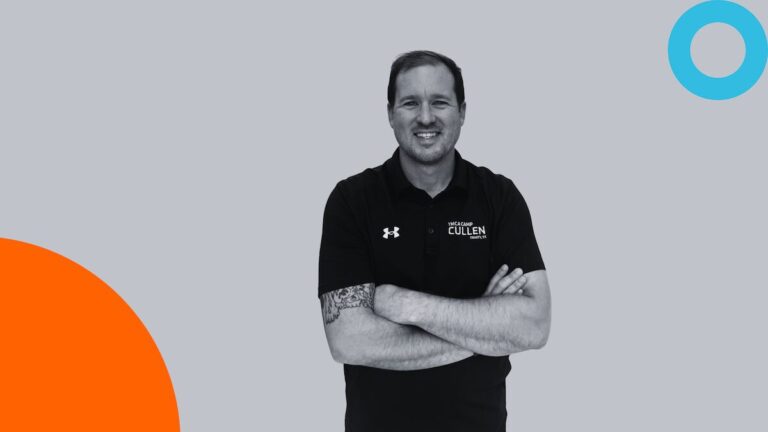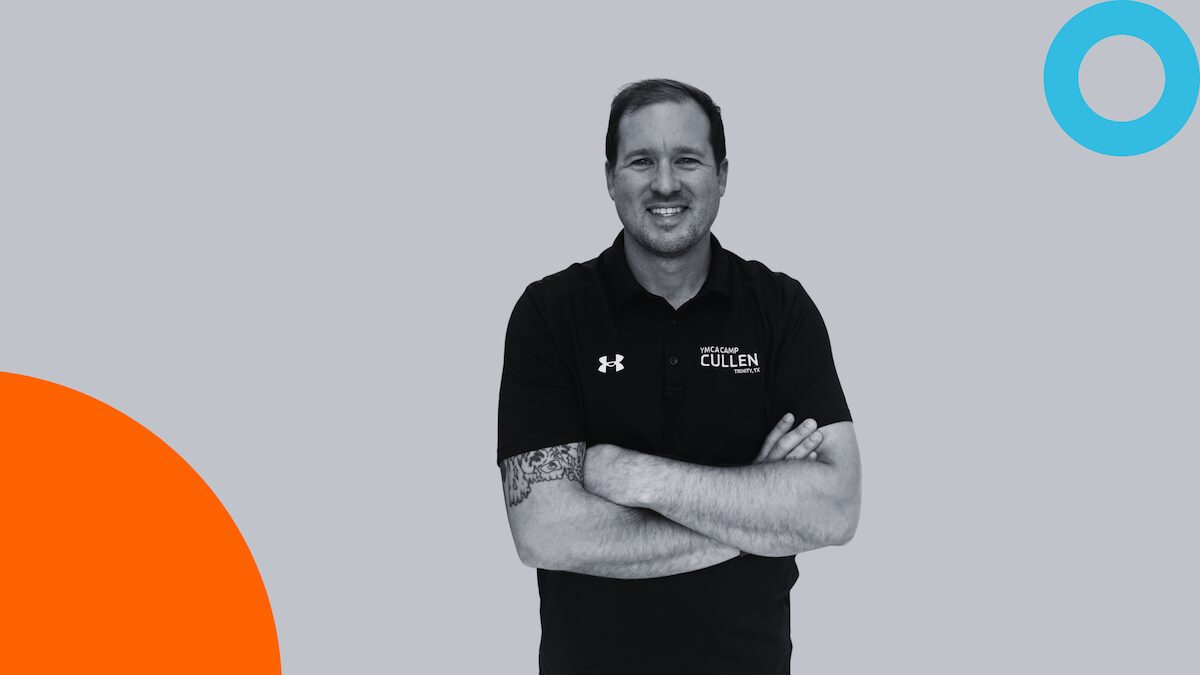
YMCA Camp Cullen funds camp financial assistance by treating it as a fixed fundraising target, not a leftover: its board, association, and team raise about $750,000 every year so no family is turned away for cost. This past summer, roughly 46 percent of campers attended on some form of aid. On the Charity Charge Show, Executive Director Bobby Thomas walked Stephen Garten through how that model works, what it costs to keep a 530-acre camp running year round, and how new Texas safety laws changed the job.
Quick Summary
- YMCA Camp Cullen is the overnight camp and conference center of the YMCA of Greater Houston, located in Trinity, Texas, and it operates year round.
- The camp raises about $750,000 a year for financial assistance. About 46 percent of summer 2026 campers received aid, and capacity, not cost, was the only reason families were turned away.
- Year-round revenue comes from three lines: summer camp, weekday outdoor education for schools, and weekend retreats and conferences.
- Camp Cullen adapted to Texas’s 2025 camp safety laws by reformatting its emergency procedures, adding signage and lighting, and installing an all-camp PA system funded by a Safe Summers Fund grant.
- Thomas’s leadership approach rests on shared accountability, collaboration with peer camps, and a deliberate one-week break from screens for every camper.
What is YMCA Camp Cullen?
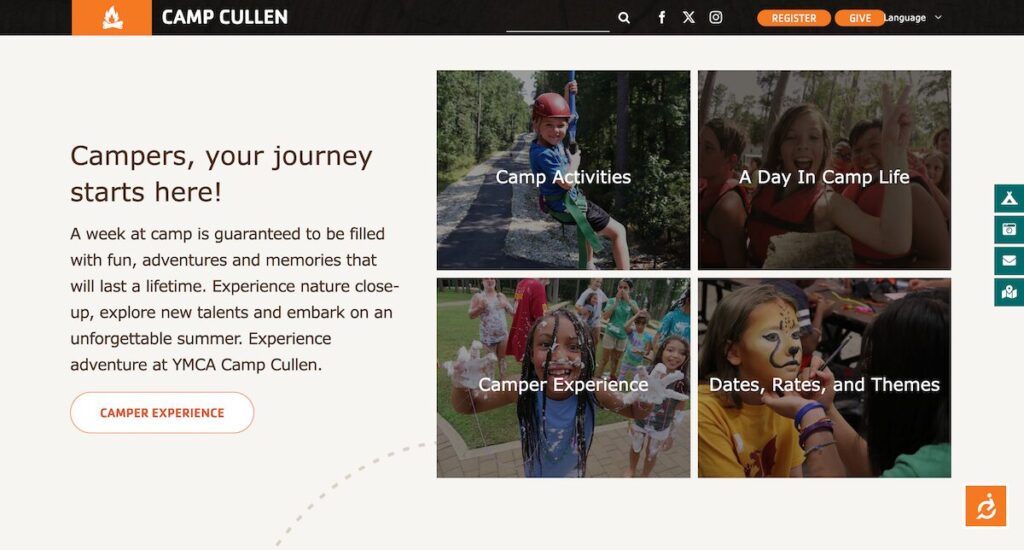
YMCA Camp Cullen is the overnight camp and conference center for the YMCA of Greater Houston, set on 530 acres in Trinity, Texas, about an hour and a half from Houston. It runs year round, not just in summer.
The calendar has three distinct programs. June through early August is summer camp. During the school year, weekdays go to outdoor education, where schools from Greater Houston and as far as the Dallas area bring students for one to three days of hands-on learning. Weekends are for retreats and conferences: churches, sports teams, companies, and scout troops.
The property itself does a lot of work. It includes lake access, a working geology lab, and a rock quarry that ABC13 reported was originally dug in the late 1800s to supply rock for railroad construction. Thomas notes the camp turned 50 last year, which makes it young by YMCA standards. Some YMCA camps have already passed 100.
For nonprofit operators, the model is worth noting on its own. A seasonal asset with a 10-week peak becomes a year-round facility with three revenue and mission streams, which spreads fixed costs like maintenance, insurance, and staff across far more program days.
How does a YMCA camp fund financial assistance for every camper?
Camp Cullen funds financial assistance through dedicated annual fundraising, about $750,000 a year, raised by its board, the YMCA of Greater Houston, and its own team. That money exists specifically to close the gap between what camp costs and what families can pay.
Thomas is direct about why the number matters. Overnight camp is expensive to operate. Feeding roughly 300 people for a full week, keeping the lights on, and staffing safely all carry real costs, and historically that has made overnight camp one of the least accessible youth programs in the country.
“I don’t have to say no to anybody,” Thomas told Stephen Garten. Full-pay campers offset part of the cost. Donors cover the rest. This past summer, about 46 percent of campers were on some form of aid.
The most telling line in the conversation was about capacity. According to Thomas, the only reason the camp said no this summer was that it ran out of beds. He has worked at other camps with different fundraising goals and has never before been in a position where cost never forced a no.
This is personal for him. Thomas grew up in a single-parent home in North Carolina and attended a YMCA camp in Alabama that had a strong scholarship program. He credits camp with building his independence. He met four of his five groomsmen there and met his wife at camp.
What does a camp executive director actually do year round?
A camp executive director’s year-round job is mostly infrastructure, risk, and fundraising. The summer program is what families see; the work behind it is facilities maintenance, safety assessment, and a steady pipeline of grants and donor meetings.
Camp Cullen has 48 buildings spread across 530 acres. Thomas describes constant risk assessment, down to watching tree lines when the wind picks up, along with scheduled tree surveys and maintenance cycles. Around 18,000 people move through the property each year, which puts real wear on facilities.
The camp’s building stock has a specific history. A fire in the dining hall in 2010 closed Camp Cullen for about two years, according to Thomas, and the camp is still working back to full financial stability. Much of the campus was rebuilt after that, so many buildings are now 15 to 16 years old. That is exactly the age when air conditioning units, water heaters, and piping start to fail at once.
Then there is fundraising. Thomas spends significant time in Houston meeting with funders, and at the time of recording he had three grant applications due the following week.
For any nonprofit finance leader, this pattern is familiar. Deferred maintenance on a building cohort that ages together is a predictable cost, and it deserves its own line in the capital budget rather than a surprise in the operating budget.
How did Texas’s new camp safety laws affect YMCA Camp Cullen?
Texas’s 2025 camp safety laws required Camp Cullen to formalize procedures it largely already had. The biggest changes were reformatting its emergency action plan to the state’s specification, adding signage and lighting, and installing an all-camp PA system.
The laws followed the July 2025 Hill Country floods, which killed 27 campers and counselors at Camp Mystic. Texas Governor Greg Abbott signed Senate Bill 1, House Bill 1, and Senate Bill 3 on September 5, 2025. Among other requirements, the laws bar licensing for camps with cabins in a floodplain, require annual emergency plans submitted to the Texas Department of State Health Services, and require evacuation maps posted in overnight buildings.
Thomas said Camp Cullen started reviewing the laws before they took effect. Most of the infrastructure, training, and emergency procedures were already in place. The heavier lift was putting the emergency action plan into the exact format the state wanted.
The PA system came through a grant from the Safe Summers Fund, accessed through the Safety Navigator platform. Both were launched by families of the girls who died at Camp Mystic to help nonprofit camps comply with the new requirements. Thomas said the system has not been needed for an emergency. On 100-degree days, it was used to call mandatory water and sunscreen breaks across the whole camp.
The financial takeaway is straightforward. New compliance requirements often arrive with targeted grant money behind them, and the camps that move early are the ones best positioned to capture it.
Why does a YMCA camp leader see other camps as partners, not competitors?
Thomas sees other camps as partners because every camp serves the same mission, youth development, and every camp has problems it is trying to solve. Sharing those problems openly makes all of them better.
Much of that mindset came from the Mid-America Camping Conference, where Thomas has served as chair and now sits on the board that manages its fiduciary side. Roughly eight or nine years ago, the conference and YMCA of the USA began bringing international camp professionals to the U.S. each January. The program honors Skip Wilke, a longtime YMCA camping leader who passed away. Each year, eight to ten international camp leaders visit several U.S. camps and exchange practices with American camp professionals.
The model has spread to other regional YMCA camp conferences, including ones in the West, New York, and North Carolina. Thomas now counts close professional contacts in Ukraine, Romania, Georgia, and elsewhere. The YMCA is a global movement, a fact Stephen Garten admitted surprised him on air.
Thomas puts it plainly with families: he would love their kids at Camp Cullen, but he cares more that they are not in front of a screen all summer.
How are camps handling kids’ screen addiction?
Camp Cullen handles screen dependence with a simple rule: campers spend the week without phones or screens. The only screen time is the opening safety orientation.
Thomas said he first saw the problem up close two or three years ago, when a camper in his office was inconsolable without a device. Since then, families have started preparing for camp on their own. One parent emailed to say her children had begun a three-week digital detox before arriving. They made it through the week, made friends, and had a great time.
Phones sneaking in is rare, Thomas said, though parents occasionally hide them in pillows or luggage. To keep families connected, camp leaders carry five or six site phones that parents can call. If a parent asks for a check-in, Thomas goes and finds the child and often sends a selfie back as proof.
On AI, Thomas is measured. He tested it by asking for an ideal two-week staff training schedule and found it largely matched what Camp Cullen already does, with a few useful additions. He sees value for back-office operations and wants firm guardrails around its use with campers.
What does leadership look like at a nonprofit camp?
Thomas defines leadership as walking alongside his team, not out in front of it. The team wins together, fails together, and learns together, and no one assigns blame.
His standard message to summer staff before the first campers arrive: something will go wrong this summer, and the team will be judged by how it responds, not by the fact that it happened. Any staff member, from a first-year counselor to the senior program director, can come to his office when they hit their limit.
Two books shape his approach. Creativity, Inc. by Ed Catmull, the Pixar co-founder, reinforced that operations do not need to be rigid. The Power of Moments by Chip and Dan Heath became an all-staff read, from food service to leadership. It pushed the team to rethink ordinary moments, like the walk between cabins and activities, and some of the best ideas came from facilities and kitchen staff who see camp from a different angle.
Three Takeaways
- Fund access as a target, not a hope. Camp Cullen sets a dedicated financial assistance goal of about $750,000 a year, which is why cost has stopped being the reason any family hears no.
- Budget for the buildings that age together. A campus rebuilt after a single event will need major systems replaced on the same cycle. Plan that capital spend years ahead.
- Move early on compliance and look for the money behind it. Camp Cullen reviewed Texas’s new safety laws before they took effect and used a targeted grant to cover its largest upgrade.
Running a camp, a youth program, or any facility-heavy nonprofit means a lot of small, constant spend across many people. See how the Charity Charge Nonprofit Business Card gives Members spend control, clean receipts, and audit-ready reporting.
Podcast Transcript Q&A
Stephen Garten: Here we are in early September, and you’ve just wrapped what must have been a great summer. To kick us off, what is YMCA Camp Cullen, and how does the YMCA run camps like it around the country?
Bobby Thomas: YMCA Camp Cullen is the overnight camp and conference center for the YMCA of Greater Houston. The YMCA has branches around Greater Houston with gyms, pools, after-school programs, and a lot of day camps. We’re about an hour and a half from Houston, in Trinity, Texas, and we operate year round. The core of our season is summer camp, June and July and a little into August. Outside of that, we do outdoor education during the week. We partner with schools from Greater Houston and up into the Dallas area, and students spend one, two, or three days learning outdoors in a nature’s-classroom environment. We have a 530-acre property with a couple of aquatic features, a real geology lab, and a quarry, so the learning that can happen there is special. It also gets kids out of the classroom to put their hands in the dirt. On weekends, we run retreats and conferences for churches, sports teams, companies, and scouts. We turned 50 last year, which is actually young in YMCA camping. Some camps have passed 100. Camps are all part of the YMCA and share the same values, but every one is unique to its community and what that community needs.
Stephen Garten: I’ll admit I was only thinking about summer. I love that you’re running programming year round. What makes Camp Cullen unique compared with other YMCA camps?
Bobby Thomas: I’m biased, but I think it’s how we bring campers of all socioeconomic backgrounds to camp. Camp is expensive. It’s expensive to operate, to keep the lights on, to feed 300 people for a full week. Traditionally, overnight camp has had real limits on access, especially financial ones. What spoke to me when I looked at this position is the amount of financial assistance we give. Our board, our YMCA, and our team raise about $750,000 every year specifically for financial assistance. So I don’t have to say no to anybody. We do have full-pay campers, and that offsets a lot of the cost. This past summer about 46 percent of our campers were on some form of financial assistance, thanks to our fundraising and the donors who know the magic of camp. I’ve never worked anywhere I didn’t have to say no. This summer, the only reason we said no was that we ran out of bed space.
Stephen Garten: What kinds of programs and activities do campers do?
Bobby Thomas: A lot of traditional camp activities, and try to set aside the camp movies, because they’re not great depictions. We have a herd of horses that stays year round, and every camper has the opportunity to ride at no extra cost. We also have specialty camps that put you at the equestrian center more. We’re right on the lake, so we use Sea-Doos and pontoon boats for tubing, kneeboarding, and wakeboarding, plus traditional canoeing and kayaking. We have a high ropes course, and we’re about to build a new one that’s more accessible. We have arts and crafts, pottery, dance, and drama. We do a lot at the quarry, and our geology room complements that. You’d be surprised how many kids get into earth and environmental science once they realize that room has air conditioning. But the big exciting things are what bring kids in. What brings them back is meeting new friends, learning from counselors from all over the world, and learning they can be the best version of themselves. That’s our staff and our culture.
Stephen Garten: I went to a camp in West Virginia for two summers as a kid, and it had none of that. But I look back on it fondly, and as an adult I’d love to go unplug for a week.
Bobby Thomas: We hear that all the time from parents. We actually offer a couple of family camps a year. One just wrapped up this past weekend, so you can come out and be a kid again.
Stephen Garten: What brought you back to camp? I believe you were a camper yourself.
Bobby Thomas: I went to a small camp in North Carolina, where I grew up, and then to a YMCA camp in Alabama. We probably drove past five or ten camps to get there. Looking back, that camp had a great financial assistance program, which mattered coming from a single-parent home. My mom worked hard to make sure my sister and I had what we needed, but camp is expensive. That’s one of the things that drew me to Camp Cullen. I was the seven-year-old crying on the camp road, and the next year I was saying, don’t even stop, just slow down and I’ll tuck and roll. Camp gave me independence. I met four of my five groomsmen at camp, and I met my wife at camp. The YMCA hasn’t managed to pry me out of it yet.
Stephen Garten: A lot of our audience are executive directors running nonprofits of every size. What do you do throughout the year that people may not recognize, and what responsibilities have you had to lean into?
Bobby Thomas: Camp has a lot of moving parts. We have 48 buildings on 530 acres, a lot of trees, and a lot of infrastructure. There are constant risk assessments. Every time the wind picks up, you’re looking for trees swaying the wrong way. We schedule tree surveys and maintenance for all those buildings. Camp Cullen had a fire in the dining hall in 2010 that closed us for about two years, and we’re still working back to financial stability, which we’re getting to now. A lot of our buildings are in that 15- or 16-year-old phase where air conditioners, water heaters, and piping start to need replacing. About 18,000 people come through every year. Then there’s fundraising. I’m in Houston a lot meeting with organizations, and I’ve got three grants due next week. Also, last year there were tragic incidents at camps in the Texas Hill Country, which turned a lot of attention to overnight camps. Those families have done great work to put guardrails in place that many camps weren’t fully meeting.
Stephen Garten: What has your camp done as a result of the flooding?
Bobby Thomas: We started reviewing the laws before they were fully in place. Honestly, we didn’t have to do a lot. We had much of the infrastructure, training, and emergency action procedures. It took time to get our emergency action procedures into the specific format the state wanted, which was good for us. The biggest project was additional signage and lighting, and, with a grant from the Safe Summers Fund through the Safety Navigator, an all-camp PA system so we can alert the whole camp at once. Fortunately we didn’t need it for that this summer, and I hope we never do. But it was great for mandatory water and sunscreen breaks on 100-degree days.
Stephen Garten: You’re involved with YMCA of the USA on international camping partnerships, and with the Mid-America Camping Conference. What has that been like, and what’s the purpose?
Bobby Thomas: I’ve attended the Mid-America Camping Conference for years. I was chair a couple of years ago, and now I sit on the board that manages its fiduciary side. Eight or nine years ago, Skip Wilke, who was very involved with YMCA of the USA, international programs, and camp, passed away. To honor his commitment, we started a program with the conference and YMCA of the USA to bring camp professionals from other countries to the U.S., because professional development in many of those countries isn’t as strong yet. Every January we bring eight to ten international camp leaders to visit several camps and learn alongside U.S. camp professionals, and they bring a lot of knowledge too. Now other regional conferences, in the West, New York, and North Carolina, use the same model. I’ve built close relationships with people in Ukraine, Romania, Georgia, and beyond. Friends for life, and contacts I can lean on.
Stephen Garten: So there are YMCAs operating around the world?
Bobby Thomas: There are. The YMCA is international. One of the cheesy things I like to do when I travel is find the local Y. We’ve seen Ys in Hong Kong, across Eastern Europe, and in Colombia. They’re all over.
Stephen Garten: I’m a big believer in collaboration, not competition. You’re about to apply for grants. How do you think about collaborating with other camps instead of seeing them as competition for funding?
Bobby Thomas: The Mid-America Camping Conference instilled that in me. We check our egos at the door and ask, what are our real problems? Every camp has issues, no matter how it portrays itself. A collaborative environment helps the youth we’re all serving. We’re all in it for youth development and the next generation of leaders. I don’t tell my boss this, but I’ve told families I don’t care where their kid goes to camp, as long as they’re not in front of a screen all summer. Of course I want them at Camp Cullen. But that’s what I really want.
Stephen Garten: Keep leaning into that. A real connection to the mission is a key trait of the organizations I see succeed.
Bobby Thomas: It’s how I feel, and it’s what I learned from incredible leaders during my time with the Y. What we do is youth development. Who we do it for is the YMCA. But the ultimate mission is helping kids become the best version of themselves, build character, and gain independence, so when they go to college or live on their own, it isn’t a shock. They’ve been away from home before, and they can handle it.
Stephen Garten: With devices and AI changing the world, what trends are you noticing in kids at camp today compared with 10 or 20 years ago?
Bobby Thomas: You hear about addiction to phones and screens, and then you actually see it. I first saw it two or three years ago, a kid in my office who was inconsolable because he needed that screen. It’s an addiction, and it’s scary. For us, it’s about giving kids at least one week of disconnection. We don’t do esports. The only screen they see is the orientation presentation where our senior program director walks through emergency procedures. That one week is powerful. One mom emailed before her kids’ session to say they’d already started a digital detox, three weeks before camp. Part of me thought, that’s crazy it takes that. The other part said, thank you. They made it through the week, had a blast, and made new friends. On AI, I think it can help camps with back-end operations. Before last summer I asked it what the most effective two-week staff training schedule would look like, and it was basically what we already do, with a couple of things we picked up. It can be abused too, so we’ll keep guardrails on it in camping.
Stephen Garten: Do kids sneak phones in? How do you handle it?
Bobby Thomas: It’s pretty rare. Every now and then we find a teen with one, and we’ve had parents hide phones in pillows and suitcases. But most families now appreciate the detox. We try to offer as much access as we can. Our leaders carry five or six site phones that parents and guardians can call. Our promise is that if you call and ask us to check on your child, we’ll go find them. I like to take a selfie with them and send it, so parents know I actually did. If families aren’t going to have one-to-one access, it’s important we offer that.
Stephen Garten: What does leadership mean to you, and what books have helped you become a better leader?
Bobby Thomas: For me, leadership is walking alongside the team, not leading from in front. We use a lot of “we.” We don’t place blame. We win together, fail together, and learn together. As long as we’re learning from what didn’t go perfectly, we’re progressing. The last thing I tell our summer staff before the first kids arrive is that even after two or three weeks of staff education, we can’t cover everything. Something will go wrong this summer, and we’ll be judged by how we respond, not that it happened. Everyone from a first-year counselor to the senior program director knows they can call, text, or come to my office anytime, even just to vent together. I know how hard the counselor job is. On books, Creativity, Inc. by Ed Catmull, about building Pixar, was really good. It shows things don’t have to be so cut and dried and that there’s room for creativity every day. He released an updated edition recently, too.
Stephen Garten: I’m adding it to my cart. I love hearing what other leaders are reading.
Bobby Thomas: Pretty much anything from Chip and Dan Heath is a good read. Every year we do an all-staff read, everyone from food service to leadership, and last year we read The Power of Moments. It challenged us to look at every operation and ask how to make it a real moment, from waking up to the bugle to the walk from cabin to activity. Our facilities and kitchen teams had awesome ideas because they see camp from a different perspective. And no, I’m not getting a kickback.
Stephen Garten: Where can people learn more, get involved, donate, or send their kids?
Bobby Thomas: Our website is ymcacampcullen.org, and since we’re part of the YMCA of Greater Houston, you can also get there through ymcahouston.org. I’m always happy to talk with people who have ideas or experiences to share. We have a lot of ideas, but not all of them, and we rely on others to help us find new ways to do camp.
Stephen Garten: Your openness and collaborative perspective really stand out, and so does the fact that you went through the experience yourself and are now giving back.
Bobby Thomas: Thank you. I’m fortunate to have a great team and a supportive supervisor, and the YMCA of Greater Houston loves camp. I never take that for granted. Thanks for letting me share the weird magic I think Camp Cullen has.
FAQ’s From This Episode
YMCA Camp Cullen raises about $750,000 a year specifically for camp financial assistance. The camp’s board, the YMCA of Greater Houston, and the camp team fundraise for it, and full-pay campers help offset costs. In summer 2026, about 46 percent of campers received some form of aid.
YMCA Camp Cullen is in Trinity, Texas, about an hour and a half from Houston. It is the overnight camp and conference center of the YMCA of Greater Houston and sits on 530 acres that include lake access, a geology lab, and a historic rock quarry.
Yes, YMCA Camp Cullen operates year round. Summer camp runs June through early August, weekdays during the school year host outdoor education for schools, and weekends host retreats and conferences for churches, sports teams, companies, and scout groups. The camp also offers family camp weekends.
Texas passed Senate Bill 1, House Bill 1, and Senate Bill 3, signed September 5, 2025, after the Hill Country floods. The laws bar licensing for camps with cabins in a floodplain, require annual emergency plans filed with the state health department, and require posted evacuation maps in overnight buildings.
No, campers spend the week without phones or screens at YMCA Camp Cullen. To keep families connected, camp leaders carry site phones parents can call, and staff will find a camper and check in on request.
The Safe Summers Fund is a grant program that helps nonprofit summer camps pay for safety improvements needed to meet Texas’s new camp laws. It was launched in 2026 by families of the girls who died at Camp Mystic, and camps apply through the free Safety Navigator platform.