Nonprofit crisis communication is the practice of speaking clearly and humanely to families, staff, funders, and the press when something has gone wrong, or when the public fears it might. Gregg Hunter, President and CEO of the Christian Camp and Conference Association (CCCA), learned the discipline at Boeing and has applied it across a nonprofit career, most recently after the Camp Mystic flood in July 2025. He walked through it with Charity Charge founder Stephen Garten on the Charity Charge Show, where we talk with nonprofit leaders about how their organizations actually run.
Quick Summary
- Gregg Hunter leads CCCA, an association founded in 1963 that serves more than 800 member camps and conference centers. He says well over 90 percent of them are nonprofits.
- His crisis communication rules come from Boeing training: lead with care, stay under control, never look casual, and carry a small set of prepared messages.
- After the Camp Mystic flood, he sought national media interviews to answer one question on behalf of member camps: is camp safe?
- CCCA runs on earned revenue from membership and events and breaks even each year. It deliberately avoids competing with its own members for donors.
- His leadership standard is perfection, delivered with grace. He explains how he got the second half wrong early in his career.
What is nonprofit crisis communication?
Nonprofit crisis communication is the plan and the practice an organization uses to respond publicly when an event threatens people’s safety or the organization’s credibility. For a nonprofit, the audience is wider than customers. It includes the families served, staff, volunteers, donors, the board, regulators, and reporters.
Hunter’s version was built in a high-consequence setting. As a young communications manager on Boeing’s 777 program, he was sent through PR training and then a separate crisis communications course. The final exam was a simulated press conference: a plane has gone down, local media have found you at your hotel, walk through that door.
“There are lights and cameras and microphones and people yelling questions,” Hunter said. The whole class then watched each recording back and critiqued it.
What did Boeing teach a CEO about nonprofit crisis communication?
Boeing’s training taught Hunter that composure and visible care matter as much as the words. Three lessons from the episode transfer directly to nonprofit leaders.
1. Lead with care, and do not confuse sympathy with liability
Hunter opened his simulated statement by expressing sympathy for those who had lost loved ones. The instructor pressed him twice on whether that meant Boeing was accepting responsibility. He repeated that he was extending condolences, not accepting responsibility.
2. Never look casual
Hunter recognized the instructor behind the lights and smiled. During the review, the instructor stopped the tape and told him that a spokesperson never smiles when lives have been lost. The reason did not matter, because the audience only sees the smile.
3. Sound like a person and carry prepared messages
Hunter says he has drawn on that training when real cameras showed up. “You need to appear human,” he said. “You need to show that you care, not just that you’re a machine or a robot.”
Then stay cool and deliver the key messages you already have ready.
None of this requires a corporate communications department. A nonprofit crisis communication plan needs three decisions made in advance: who speaks, what the first sentence is, and what the organization will and will not say before the facts are confirmed.
How should a nonprofit respond to a crisis at a peer organization?
A nonprofit should respond to a peer organization’s crisis by answering its own stakeholders’ main question in public. CCCA did this after the Camp Mystic flood, telling parents how to judge whether a camp is safe.
On July 4, 2025, flash flooding on the Guadalupe River in Kerr County, Texas struck Camp Mystic, which later confirmed the deaths of 27 campers and counselors. Camp Mystic was not a CCCA member, but parents were contacting CCCA member camps with concerns.
Hunter said he felt a responsibility to his members to seek media attention, both to express how camp professionals felt about the loss and to speak to parents with children registered for the rest of the summer. He said he gave interviews to The New York Times, the Associated Press, and CNN.
His message was specific: camp leaders treat safety as the first priority, and parents should call any camp and ask hard questions. “Camps are not going to be offended when you ask, is my kid safe there?” he said.
He also described what member camps did next. Leaders pulled out their safety protocols and asked what they would do if the same storm reached them. Most found their plans were sound, then made targeted upgrades: an additional weather alert app, and radios they trust to work across the property in severe weather.
This is the part executive directors in any field can borrow. A crisis at a peer organization is a reason to test your own plan and to tell your stakeholders that you did.
How should nonprofit leaders handle staff mistakes?
Nonprofit leaders should keep the standard high and change how they respond when someone misses it. Hunter tells his team, including the editor of CCCA’s magazine, that the standard is perfection. He is direct about why: he saw nonprofits accept lower quality because they could not afford the best tools or talent, and he was never satisfied with that.
He is equally direct about what he got wrong. Early in his nonprofit career, a memo went out over the president’s signature with a typo. He called the whole team into a conference room, demanded a report within hours on how it would never happen again, and walked out.
Today he would handle it differently. He would bring in the one person, ask what happened, and ask whether another proofreader or step belongs in the process. He would also make sure that person knows they have not lost his respect.
Part of that standard came from watching Alan Mulally lead the 777 program at Boeing. Mulally later became CEO of Ford and was ranked third on Fortune’s 2014 list of the World’s 50 Greatest Leaders, behind Pope Francis and Angela Merkel. Hunter said Mulally reviewed his work weekly, and years later Hunter brought him in to lead a seminar for larger CCCA camps.
How does a nonprofit association fund itself with earned revenue?
A membership association can fund itself through dues and event revenue instead of donations, and CCCA does. Hunter described CCCA as a nonprofit that runs on a profit and loss basis, with revenue streams and expenses that break even each year. Member camps pay for membership and for conferences.
The reasoning is strategic. People who care about camp are most likely to give to the camp they attended as a child. CCCA supports that and does not want to stand between a donor and a member camp.
The one exception is Corners of the Field, a scholarship fund that helps member camps host children who could not otherwise attend, with a focus on children in foster care. The name comes from the instruction in Leviticus that farmers leave the edges of their fields unharvested for the poor and the foreigner.
Hunter said the board approved using dividends from an unrestricted investment account to fund it, supplemented by offerings taken at conferences. By his account, the fund has returned about $800,000 to member camps and sent more than 4,000 children to camp.
For finance leaders, the model is worth studying. Stephen Garten’s observation in the episode: people value what they pay for, and paying members show up and give feedback.
How does nonprofit collaboration work across 800 independent camps?
Nonprofit collaboration across CCCA’s 800 member camps works through structure, not goodwill alone. CCCA divides the country into seven regions and, by Hunter’s count, about 23 active sections. Each section has an elected volunteer president from a member camp who builds a team and runs an annual conference, usually hosted at a camp to keep costs down.
The national conference draws between 700 and 900 full-time attendees and offers roughly 60 seminars. The first night’s dinner is seated by job function: marketing with marketing, fundraising with fundraising, executive directors with executive directors.
Between events, CCCA runs online roundtables where a panel takes questions from peers. Hunter’s pitch to a director at a remote property is simple: if you have ever wished you had someone to talk to about a problem, get online with 50 of them.
Members tell him the unstructured time with peers is the most valuable part. That matches what Stephen Garten hears from executive directors across the sector: many of them are leading alone.
Why are summer camps phone-free?
Summer camps go phone-free because time in nature and face-to-face contact do measurable good, and devices interrupt both. Hunter cited a Stanford-led study published in the Proceedings of the National Academy of Sciences in 2015. It found that a 90-minute walk in a natural setting reduced self-reported rumination and activity in a brain region linked to it, while a 90-minute urban walk did not.
Screen time gives the context. Common Sense Media’s 2019 census found that U.S. teens average 7 hours and 22 minutes of screen media a day, not counting school or homework.
Hunter said nearly all CCCA member camps keep phones out of campers’ hands. He also said camp leaders report rising anxiety and depression since the pandemic, among campers and among the 18-to-24-year-old counselors who serve them.
The most persuasive voice he quoted was a teenage camper who spoke at CCCA’s national conference. She had heard some camps were considering allowing phones and told the room not to do it. Without her phone, she said, she looked her friends in the eye, and the friendships felt real.
How can parents find Christian summer camps and summer camp scholarships?
Parents can find Christian summer camps by searching by location and activity, then calling each camp to ask about safety, cost, and summer camp scholarships. CCCA’s website at ccca.org includes a camp search by zip code, distance, activities, and denomination. Hunter noted during the recording that the site was mid-upgrade, so some functions may be temporarily unavailable.
His advice on what to ask:
- What are your safety protocols, and do you have a severe weather plan I can read?
- How do you communicate with parents during an emergency?
- What does a week cost, and do you have a scholarship fund?
Almost every camp he knows has scholarship money, and some have a policy that no child is turned away. The funds are finite. Call in the fall or early winter, before spring registration fills and scholarship budgets are spent.
Three Takeaways
- Prepare the first sentence before you need it. Nonprofit crisis communication starts with care: stay composed, and never look casual. Decide who speaks and what they say first while things are calm.
- A standard of perfection only works with grace attached. Ask what happened and what the process needs. Do not make the person afraid to tell you next time.
- Earned revenue changes the relationship. When members pay, they show up and tell you what to fix, and you are not competing with them for the same donors.
Charity Charge builds financial tools for nonprofits, including camps and conference centers. See how Charity Charge gives nonprofit finance teams spend controls, receipt capture, and accounting integrations in one platform.

Podcast Q&A Transcript
Stephen Garten: Tell us about the organization, the mission, and why you are passionate about the work.
Gregg Hunter: Christian Camp and Conference Association, which I shorten to 3CA, has been around since 1963. It was founded by a group of Christian camping people who saw they had the same needs and challenges and decided to pool resources and take advantage of economies of scale. We have over 800 camps in our membership. Our mission is to maximize ministry for member camps and conference centers. We are here to help them do more of what they do, and do it even better.
Stephen Garten: Are most of those member camps nonprofits?
Gregg Hunter: It is in the nineties, percentage wise. Maybe four or five percent are for-profit camps, and it may be fewer than that. Just a handful.
Stephen Garten: You started at Boeing. How did that experience shape how you run a nonprofit?
Gregg Hunter: I interned at Boeing out of college and stayed about six years. Shortly after I went full time, I was asked to join the new airplane program that became the 777. I became the editor of an internal newsletter that told the whole company about the progress of the airplane, the first jet designed entirely digitally. I worked fairly closely with Alan Mulally. My boss reported to him, and he reviewed my work every week and gave me feedback. I learned about quality and a commitment to pursue perfection. My boss and my colleagues were sticklers. It had to be right.
I left Boeing to head communications at Young Life, which was instrumental in my own life growing up. I took the same practices with me. I had already seen that in the nonprofit world it was sometimes considered acceptable not to pursue perfection. We cannot afford the best technology or the best talent, so we make do. I was never satisfied with that. I still tell my staff today that our standard is perfection. Now, there is grace when we miss it, because none of us is perfect.
Stephen Garten: What is the other side of perfection? When are you able to be okay with a mistake, and how do you communicate that to your team?
Gregg Hunter: When I first came to Young Life, a memo went out from my department over the president’s signature with a typo right above his name. I called a meeting, got the team in a conference room, and said I need to know how this happened and I need to hear within a couple of hours how it is never going to happen again. Then I left the room. There was not a lot of grace in it. I regret that. Today I would bring in the one person and ask: did you notice this, can you tell me how it happened, is there another proofer we need in the process? And I would want that person to know they have not lost my favor. Let’s move ahead together.
Stephen Garten: I have a 14-month-old son. How have you applied that grace as a father?
Gregg Hunter: My early years as a father probably reflected my early years as a supervisor. My own dad was former military and a county sheriff, and he ran the home like the sheriff’s office. I started off the same way. I have apologized to my sons, more than once. For young parents I would say: where you can apply grace, please do. Listen a little more. Be slower to punishment.
Stephen Garten: What did Boeing teach you about communicating under pressure?
Gregg Hunter: I was sent to PR training and then separately to crisis communications training. The worst crisis Boeing could face generally means people have lost their lives, so the training was intense. The final project was a simulated press conference. You are told a plane has crashed, local media know you are at the hotel, walk through that door. Lights, cameras, microphones, people yelling questions. I gave my statement expressing sympathy, and the instructor asked whether that meant Boeing was claiming responsibility. I knew who he was, and I smiled. When we watched the tape, he stopped it and said you never smile when there is a loss of life. Take it seriously and be under complete control.
That training has served me well. You need to appear human. You need to show that you care, not just that you’re a machine or a robot. Then stay cool and deliver the key messages you have ready. And then, in the summer of 2025, the Camp Mystic tragedy happened.
Stephen Garten: That was close to home for me. I am in Austin.
Gregg Hunter: It was horrifying and heartbreaking for everybody I know and work with. If you run a camp anywhere, you put yourself in their position and ask what you would have done. With my PR background, I felt a responsibility to my members to seek media attention, to explain how Christian camping people felt about the tragedy and to answer the question on every parent’s mind: is camp safe? I wanted to reassure parents that camp leaders know safety is priority one.
Stephen Garten: What changed at camps after that?
Gregg Hunter: I talked to a lot of leaders. They told me they pulled out their safety protocols and asked, if that happened here, what would we do, and is our plan adequate? Most said there was not a lot they had to change. But they upgraded. Another weather app. A different kind of walkie-talkie they know will work around camp in that kind of storm.
Stephen Garten: How do you foster collaboration across hundreds of organizations?
Gregg Hunter: We have divided the country into seven regions, and those into about 23 functioning sections. Each has an elected volunteer president from a member camp who builds a team and delivers a conference every year, hosted affordably at a camp. Members say the most valuable piece is the time together. Our national conference has drawn between 700 and 900 full-time attendees in recent years, with about 60 seminars. The first night’s dinner is by cohort: marketing, fundraising, executive directors, program. We also run online roundtables. If you ever sit alone at your remote location wishing you had someone to talk with, get online with 50 someones and ask your question.
Stephen Garten: What is camp like today, with everything we know about screens and anxiety?
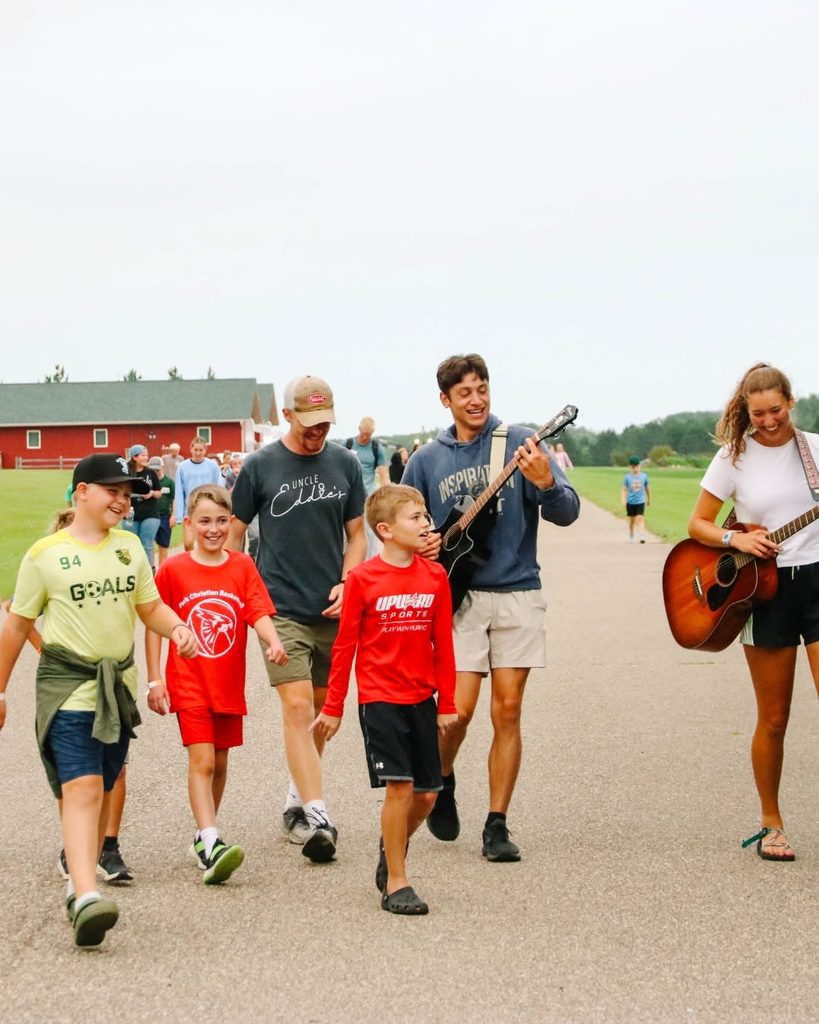
Gregg Hunter: I have visited over 160 camps. There is a Stanford study showing that a 90-minute nature walk begins to settle the part of your brain that governs rumination. The people I serve say anxiety and depression have continued to grow since COVID, for campers and for the 18-to-24-year-old counselors. At least 99 percent of the camps I serve remove technology. A teenage girl spoke at our national conference and told the room: do not let kids have their phones. She said that instead of texting her friends across the lunch table, she was looking them in the eye, and the relationships felt real.
Stephen Garten: How can parents find a camp, and what if they think they cannot afford it?
Gregg Hunter: We have a search function on our website. Enter your zip code, choose how far you are willing to drive, and select the activities you want. Then call the camp. Ask about safety protocols and how they communicate with parents. Ask what a week costs. Almost every camp I know has a scholarship program, and some have a flat policy that no child is turned away. Go early, before the scholarship fund is exhausted.
We also have a scholarship fund of our own. It is called Corners of the Field, from the Old Testament command to leave the corners of your field so the poor and the foreigner can be fed. We fund member camps to host kids who cannot afford to go, and we focus on kids in the foster care system. The idea is that if those kids can go every year to a camp where they are loved and have positive role models, it can change the course of a life. We have given back about $800,000 to our members, and I think over 4,000 kids have gone to camp because of it.
Stephen Garten: How is CCCA itself funded?
Gregg Hunter: We are a unique nonprofit in that we run on a profit and loss basis. We have revenue streams and expenses, and we break even every year. Corners of the Field is really our only fundraising effort, and we largely fund it internally from the dividends on an unrestricted investment account, plus offerings at our conferences. We do not have a lot of donors, and that is intentional. If people are passionate about Christian camping, we would rather they give directly to the camp they went to as a kid.
FAQs From This Episode
Nonprofit crisis communication is how a nonprofit speaks to families, staff, donors, and the press when an event threatens safety or trust. It covers who speaks, what is said first, and which prepared messages are delivered. The goal is to show care, share confirmed facts, and protect the organization’s ability to serve.
A nonprofit leader should start with care for the people affected. Gregg Hunter of CCCA, who trained in crisis communications at Boeing, says a spokesperson should express sympathy, stay composed, and never appear casual. He was trained to express sympathy without accepting responsibility, then deliver prepared key messages.
Many summer camps are nonprofit organizations. Gregg Hunter, CEO of the Christian Camp and Conference Association, says well over 90 percent of its more than 800 member camps and conference centers are nonprofits, with only a handful operating as for-profit businesses. Structure varies by camp, so families and funders should ask each one directly.
An association can run on earned revenue such as membership dues and conference registrations. CCCA operates on a break-even profit and loss basis and limits fundraising to one scholarship fund. This keeps the association from competing with its own members for donor dollars.
To find out if a summer camp is safe, call the camp and ask. Request its safety protocols and severe weather plan, and ask how it communicates with parents during an emergency. Gregg Hunter says camp leaders expect these questions and treat safety as their first priority.
Yes, most camps offer summer camp scholarships, and some have a policy that no child is turned away for inability to pay, according to Gregg Hunter of CCCA. Funds are limited, so ask in the fall or early winter. CCCA also runs Corners of the Field, a scholarship fund focused on children in foster care.